Tennis Bracelet Size Guide: Find Your Fit
A tennis bracelet should feel like a natural extension of your wrist: fluid, luminous, and comfortably present without slipping toward your hand. This tennis bracelet size guide helps you find that balance, whether you are choosing a first diamond bracelet, marking an anniversary, or investing in a refined everyday signature.
Unlike a rigid bangle, a tennis bracelet is designed to move. The right size lets the diamonds catch the light with every gesture while keeping the clasp secure and the silhouette elegant. A fraction of an inch can change the experience, so the most beautiful choice is not always simply the closest measurement.
How Should a Tennis Bracelet Fit?
A well-fitted tennis bracelet rests gently on the wrist with a little room to move. It should not pinch, leave a deep impression, or feel as though it may slide off over your hand. For most people, the ideal fit allows you to slip one finger comfortably between the bracelet and your wrist.
That standard is a starting point, not a rule. Someone who prefers a clean, tailored look may favor a closer fit, while someone drawn to relaxed layering may want more drape. Diamond size also matters. A bracelet set with larger stones has more visual presence and may feel fuller around the wrist than a delicate design of the same length.
The goal is refined ease: enough movement for the bracelet to lie beautifully, but not so much that it constantly rotates or catches against a watch, sleeve, or desk.
Tennis Bracelet Size Guide: Measure Your Wrist
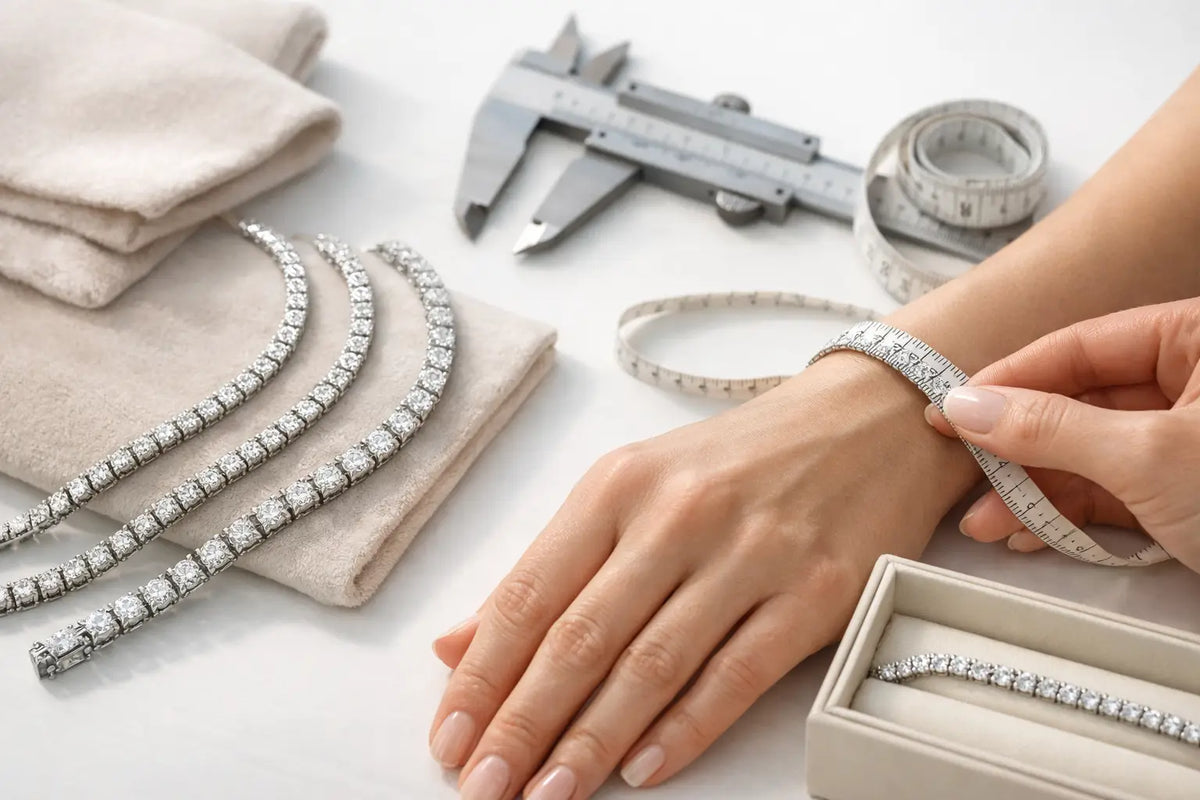
The most reliable way to choose your size is to measure the wrist where you plan to wear the bracelet. Use a soft measuring tape and wrap it around your wrist just below the wrist bone. Keep the tape flat against your skin without pulling it tight, then record the measurement.
If you do not have a measuring tape, use a narrow strip of paper or a piece of string. Mark where the ends meet, lay it flat beside a ruler, and measure the length in inches. For the most accurate result, measure twice at different times of day. Wrists can swell slightly with heat, activity, and hydration.
Once you have your wrist measurement, add length based on your preferred fit:
- For a close, polished fit, add about 0.5 inch.
- For a classic everyday fit, add about 0.75 inch.
- For a looser, more relaxed fit, add 1 inch or slightly more.
- If you are between standard sizes, sizing up is usually the more comfortable choice.
Consider the Bracelet’s Width and Diamond Carat Weight
Length is only one part of fit. The bracelet’s profile influences how it feels and how it sits on the wrist. Fine, petite diamonds create a light and subtle line of brilliance, while larger lab-grown diamonds create a more substantial presence that can make a bracelet feel snugger.
A wide or high-set design may also need a touch more room than a low-profile, delicate setting. If you are selecting a bold carat weight or a multi-row style, a relaxed fit often preserves the graceful movement that makes tennis bracelets so distinctive.
Pay attention to the setting, too. Four-prong designs emphasize each individual diamond and offer classic sparkle, while bezel or more enclosed settings can create a smoother, sleeker surface. Neither is universally better. The right choice depends on whether you prioritize traditional diamond definition, a streamlined aesthetic, or a bracelet suited to an especially active routine.
Standard Tennis Bracelet Lengths
Most women’s tennis bracelets are offered in lengths from 6.5 to 7.5 inches, with 7 inches serving as a common reference point. Smaller wrists may find 6.25 to 6.5 inches more proportional, while a 7.25- or 7.5-inch bracelet can be ideal for a larger wrist or a more relaxed look.
A longer bracelet does more than add comfort. It changes the visual mood. A close-fitting tennis bracelet looks precise and architectural, especially when worn alone. A slightly looser bracelet feels softer and more effortless, allowing the diamonds to move and reflect light from different angles.
If you are buying a gift, the recipient’s existing jewelry can offer useful clues. Measure a bracelet they already wear comfortably from end to end, including the clasp. If that is not possible, 7 inches is often a thoughtful starting point for a classic women’s tennis bracelet, provided the retailer offers a clear return or resizing path.
Should You Size Up for Layering?
It depends on what you will wear beside the bracelet. A tennis bracelet styled alone can sit close to the wrist with elegant precision. When paired with a watch, chain bracelet, or additional diamond pieces, a little extra space can prevent the stack from feeling compressed.
That said, avoid adding too much length simply because you plan to layer. A very loose tennis bracelet can twist, migrate toward the hand, and compete with the rest of the stack. If your watch has a substantial case or your companion bracelet is wide, consider separating the pieces slightly rather than relying on excess length.
For a curated stack, contrast is often more compelling than matching every detail. A white gold diamond tennis bracelet beside a warm yellow gold bangle, for instance, can feel modern and intentional. The sizing should still allow each piece to sit comfortably rather than constantly overlapping.
Fit Details That Matter Beyond Length
A tennis bracelet is a flexible line of individually set diamonds, so craftsmanship affects wearability as much as measurement. The links should articulate smoothly without feeling loose or catching. A secure clasp, ideally paired with a safety latch, offers confidence for daily wear and protects a piece intended to become part of your story.
Metal choice can subtly influence your experience as well. White gold creates a crisp, luminous backdrop that enhances the bright appearance of colorless lab-grown diamonds. Yellow gold brings warmth and contrast, while rose gold offers a softer, romantic character. The fit remains the same, but the visual effect can influence whether you choose a delicate piece for daily styling or a higher-carat bracelet for occasions.
Certification and diamond quality also deserve consideration. With lab-grown diamonds, you can often select exceptional brilliance and meaningful total carat weight at a more accessible price than a comparable mined-diamond bracelet. Look for stones chosen for balanced color, clarity, and cut, because a tennis bracelet is experienced as a continuous field of light rather than as one center diamond.
What to Do If Your Bracelet Is Between Sizes
When your measurement falls between two available lengths, choose based on the bracelet’s scale and your comfort preference. For a slim, delicate tennis bracelet, the smaller size may offer a beautifully tailored look if it still allows one-finger ease. For larger diamonds, a thicker setting, or a wrist that tends to swell, the larger option is usually wiser.
Never force a bracelet to work because the difference seems small. A fine jewelry piece should be a pleasure to reach for, not something you remove midway through the day. Before wearing it outside, try the bracelet at home for several hours. Type, reach, carry a bag, and move through your normal routine. Notice whether it rotates excessively, feels restrictive, or sits comfortably in every position.
If the bracelet is a gift, preserve the original condition until the fit is confirmed. A thoughtful fine jewelry purchase should come with the reassurance of a return window and a long-term warranty, so the recipient can enjoy the beauty of the piece without feeling locked into an imperfect size.
The right tennis bracelet does not ask for attention through discomfort. It simply catches the light when you move, sits with quiet confidence at your wrist, and becomes more personal every time you wear it.