Lab Grown Diamond Jewelry Review for Smart Buyers
A thoughtful lab grown diamond jewelry review should begin where the eye does: with brilliance. A beautifully cut lab-grown diamond has the same optical character and material composition as a mined diamond, so it can deliver the crisp flashes of white light and fire that make fine jewelry feel unforgettable. The more meaningful question is not whether it looks like a diamond. It is whether the stone, setting, craftsmanship, and buying experience justify a place in your jewelry collection.
For style-conscious buyers, lab-grown diamond jewelry offers a compelling balance: substantial sparkle, considered design, and more room in the budget for the diamond specifications or silhouette you truly want. Still, not every piece is equally refined. The details determine whether a purchase feels like modern luxury for years to come or merely a good photograph online.
What Lab-Grown Diamond Jewelry Actually Delivers
Lab-grown diamonds are real diamonds grown in controlled environments using advanced technology. They share the same carbon crystal structure, hardness, and visual properties as mined diamonds. In practical terms, a lab-grown diamond is suitable for an everyday ring, a pair of diamond studs, or an anniversary necklace intended to become part of your signature style.
Their central advantage is value. Because supply is more controllable than it is for mined diamonds, shoppers can often select a larger carat weight or stronger color and clarity grades for the same budget. That difference is especially noticeable in high-impact jewelry, such as tennis bracelets, solitaire pendants, and engagement-style rings, where every additional increment of size changes the overall presence of the piece.
Ethical and environmental considerations matter as well, but they deserve a precise view. Lab-grown diamonds avoid the land disruption associated with mining and offer a more traceable supply path. Their energy use can vary by producer and power source, so responsible brands should communicate thoughtfully rather than make sweeping claims. For many buyers, the appeal is the ability to choose diamond jewelry that reflects both personal style and modern values.
Lab Grown Diamond Jewelry Review: The Details That Matter
A diamond's origin is only one part of its story. To assess a piece with confidence, look closely at the quality signals that affect beauty, wearability, and long-term satisfaction.
Cut should lead the decision
Cut is the factor most responsible for a diamond's sparkle. A well-proportioned round brilliant can appear more lively than a larger stone with weak light performance. With fancy shapes, the evaluation becomes more personal. Oval, pear, marquise, and emerald-cut diamonds each have distinctive character, and some may show features such as a bow-tie shadow or broader flashes of light.
Review product imagery and video carefully when available. Look for balanced brightness across the diamond rather than dark areas that remain visible as the stone moves. For a center stone, cut quality is usually worth prioritizing over chasing the highest possible color or clarity grade.
Color and clarity should suit the design
Higher color grades generally appear whiter, particularly in white gold or platinum-style settings. Yet a near-colorless diamond can be a sophisticated choice, especially in yellow gold, where a touch of warmth may be less noticeable. The setting changes the visual equation.
Clarity is similar. Many inclusions are not visible without magnification, which means an eye-clean diamond can offer excellent value. For earrings and pavé jewelry, where stones are viewed from a greater distance, choosing practical clarity grades can free more of your budget for carat weight, design, or a premium metal setting. Emerald and Asscher cuts tend to reveal inclusions more readily than brilliant-cut shapes, so they may call for more careful clarity selection.
Certification creates confidence
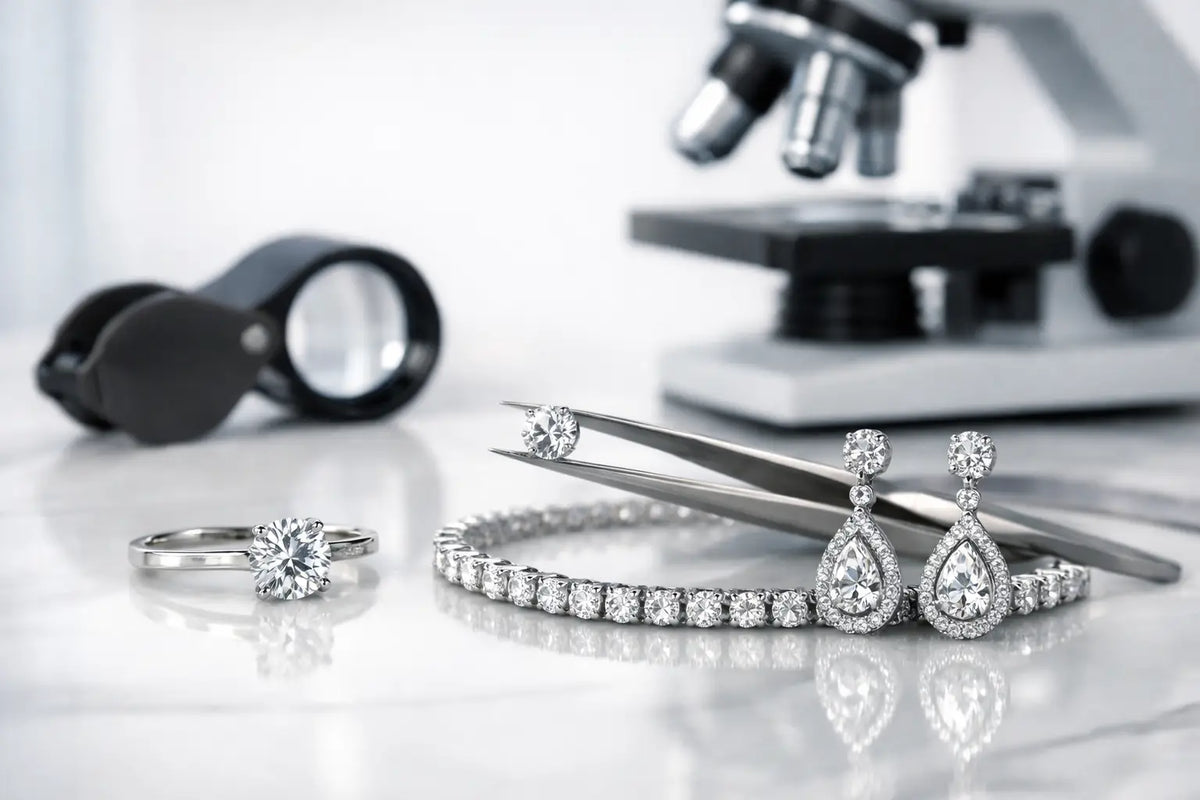
For a significant center diamond, an independent grading report is an essential reassurance. It documents key characteristics such as carat weight, color, clarity, cut or proportions, and measurements. Verify which laboratory issued the report and confirm that the listed specifications correspond to the stone you are purchasing.
Not every small accent diamond in a pavé band or tennis bracelet will have an individual certificate. That is normal. What matters is that the retailer clearly states the quality range used and provides transparent specifications for the complete piece.
Craftsmanship turns a stone into jewelry
The setting should feel as intentional as the diamond. Examine the metal type, prong structure, clasp, chain thickness, and finishing. Four or six well-shaped prongs can frame a solitaire elegantly, while a low-profile setting may better suit an active lifestyle. A tennis bracelet needs a secure clasp and thoughtful articulation so it sits fluidly on the wrist rather than feeling stiff.
For daily wear, 14K gold is often a practical favorite because it offers a balance of precious-metal richness and durability. White gold delivers a clean, contemporary contrast that makes diamonds appear especially crisp, while yellow gold brings warmth and a more classic expression. Choose the metal that complements the jewelry you already wear, not simply the one that appears most popular.
Where Lab-Grown Jewelry Offers Its Best Value
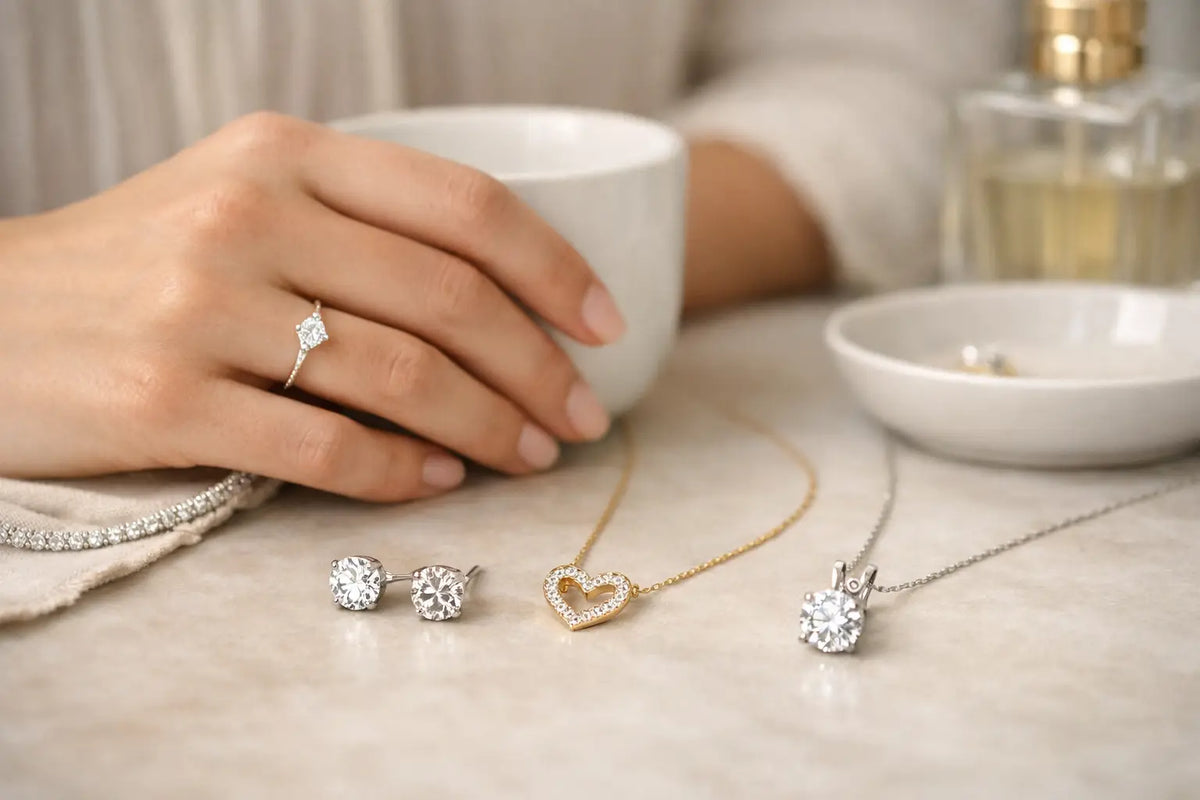
Some categories make the value advantage especially visible. Diamond studs are a natural example: increasing the total carat weight can make a meaningful difference in how they frame the face, and lab-grown diamonds make a more generous look attainable. A solitaire necklace benefits in much the same way, offering an elevated focal point without requiring an extravagant budget.
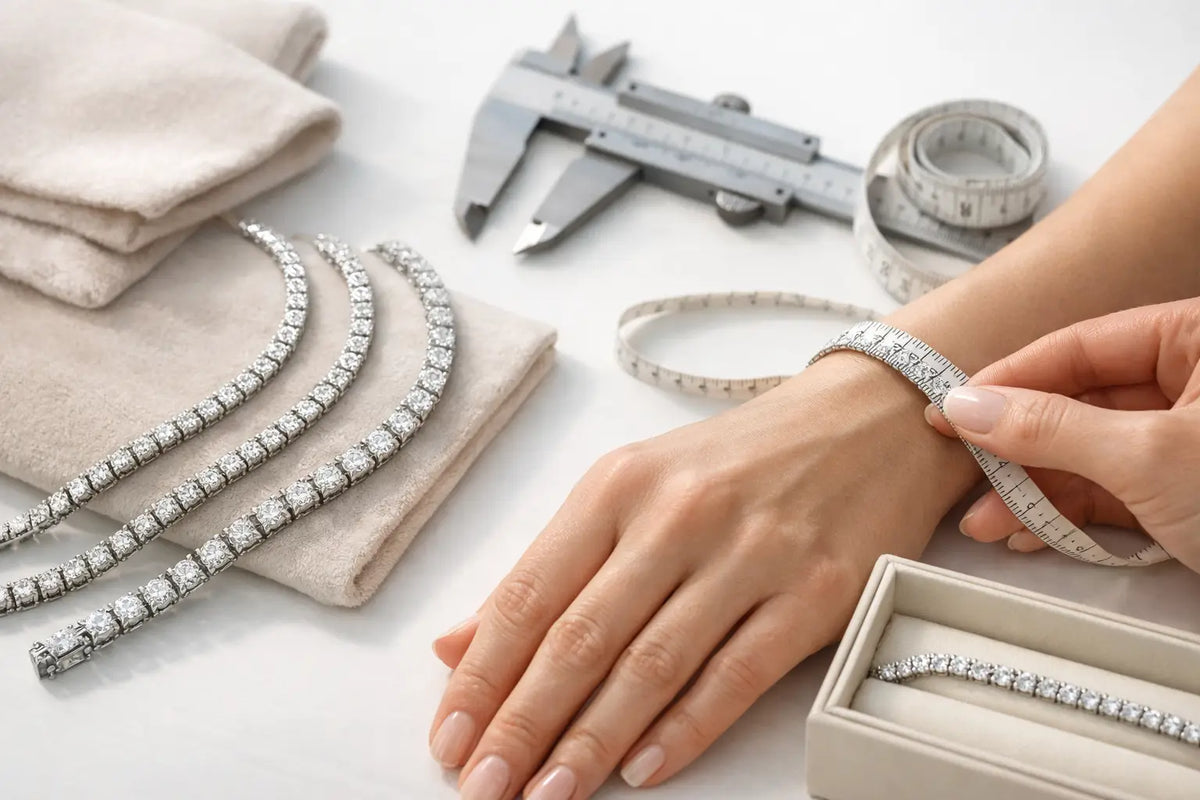
Tennis bracelets and line necklaces can also be exceptional purchases because their beauty depends on a continuous field of diamonds. Here, consistency in color, clarity, setting work, and stone matching matters as much as total carat weight. A bracelet that looks luminous across the wrist will feel more luxurious than one that simply advertises a large number.
Engagement-style rings invite the most individualized comparison. A lab-grown center diamond may allow you to choose a refined oval, emerald, radiant, or round diamond with more visual presence while preserving budget for a secure setting, wedding band, or future milestone. The right choice depends on your priorities. Someone drawn to architectural minimalism may prefer an emerald-cut solitaire, while someone who loves maximum light return may favor a round brilliant with a delicate pavé band.
The Trade-Offs Worth Knowing Before You Buy
Lab-grown diamonds offer strong price-to-carat value, but they should not be purchased with the expectation of traditional investment returns. Diamond resale values, whether lab-grown or mined, are often lower than retail pricing and can fluctuate with market supply and demand. Buy a piece for its beauty, meaning, craftsmanship, and the life you expect to live in it.
Price differences between sellers also deserve attention. A lower price can reflect a different grading range, a less substantial setting, missing certification, or a limited return policy. Compare complete specifications rather than comparing carat weight alone. Two one-carat diamonds can look remarkably different depending on cut, shape, color, clarity, and proportions.
Online shopping requires another layer of care. High-resolution imagery is useful, but it cannot replace clear product details and customer protections. Look for precise metal information, diamond specifications, certification where applicable, secure payment options, a reasonable return window, and a warranty that supports the jewelry after delivery. OROLEV pairs certified lab-grown diamonds with a lifetime warranty, 30-day returns, and free shipping, which are the kinds of safeguards that help make a fine-jewelry purchase feel considered rather than uncertain.
How to Choose a Piece You Will Keep Reaching For
Start with the moment you want the jewelry to create. A graduation gift may call for diamond studs with timeless versatility. An anniversary may deserve a tennis bracelet that layers beautifully with a watch. A self-purchase may be the ideal time for a bold solitaire ring that needs no occasion at all.
Then set your priorities in order. If size matters most, explore a slightly lower but eye-clean clarity range and prioritize an excellent-looking cut. If you prefer an icy, minimalist aesthetic, select a higher color grade in white gold. If the piece will be worn daily, give equal weight to setting security and comfort. Fine jewelry should feel effortless once it is on.
Finally, consider how the piece fits into your existing wardrobe and collection. The most satisfying diamond jewelry does not wait in a box for formal events. It catches the light at dinner, adds polish to a workday, and becomes more personal with every memory attached to it. Choose the diamond that feels unmistakably like your story, then let its brilliance meet you in the moments that matter.