Four Prong Versus Six Prong Settings Compared
The setting is the quiet design decision that changes how a diamond looks every day. In the four prong versus six prong conversation, both options can be beautiful, secure, and timeless. The right choice comes down to the diamond’s shape, the ring’s overall proportions, and whether you prefer to see more of the stone or more of the setting’s classic detail.
A prong setting uses small metal claws to hold a diamond above the band, allowing light to enter from the sides as well as the top. For a lab-grown diamond engagement ring or a meaningful diamond ring chosen for yourself, that balance of protection and brilliance deserves careful consideration.
Four Prong Versus Six Prong: The Visual Difference
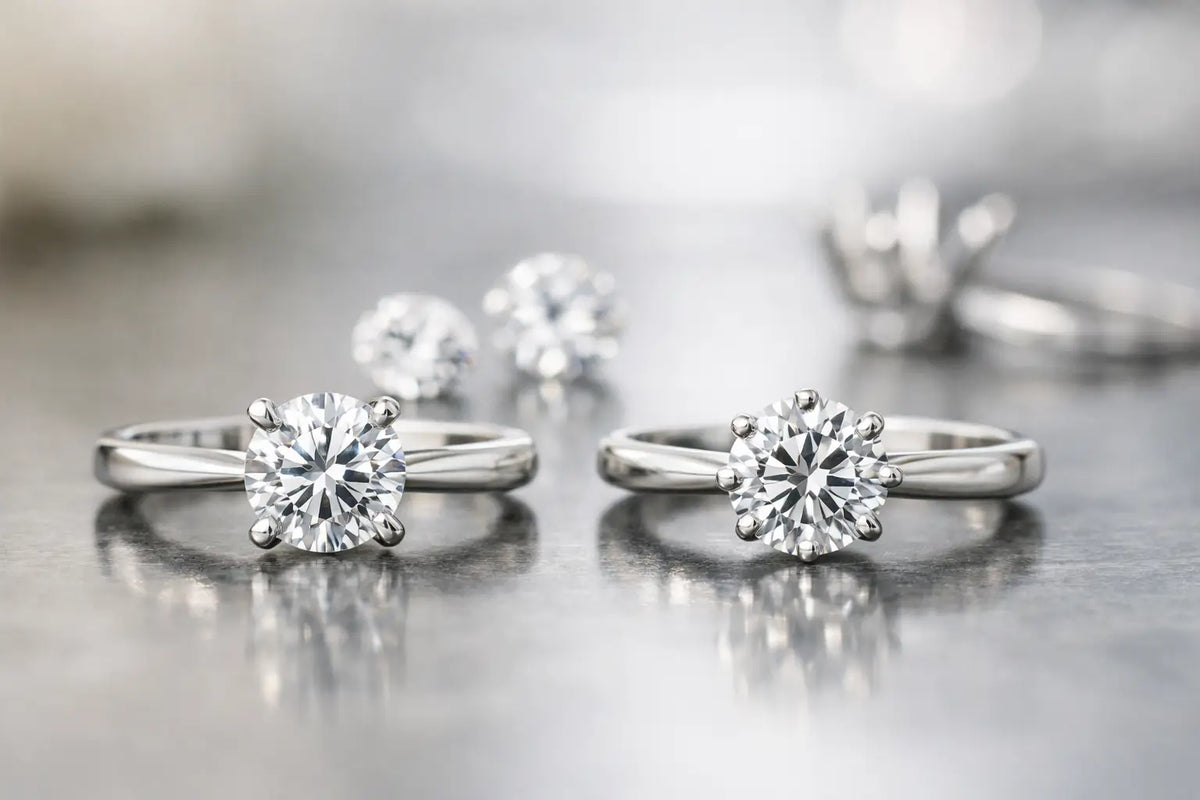
A four-prong setting places a prong at each of the diamond’s four primary points. Because less metal covers the diamond, the stone often appears more open, larger, and more defined. This style has a clean, contemporary profile that suits shoppers drawn to polished minimalism.
Six prongs create a more detailed frame around the diamond. On a round brilliant diamond, the pattern can resemble a delicate flower or crown, lending a romantic, heritage-inspired character. The additional prongs are visible, but they can also make the setting feel intentional and substantial rather than heavy.
Neither design is automatically more elegant. A four-prong solitaire highlights the diamond as the undisputed focal point. A six-prong solitaire gives the ring a more traditional presence, with a setting that feels as considered as the stone itself. The best choice is the one that complements your personal style and the way you want the ring to read from across the room.
Security: Does Six Prong Hold a Diamond Better?
Six prongs provide more points of contact than four, which offers an added measure of reassurance. If one prong is bent, worn, or damaged, the remaining prongs may continue to hold the diamond in place until the ring can be professionally inspected. This is one reason six-prong settings remain a beloved choice for heirloom-inspired engagement rings and for diamonds worn every day.
That said, a well-made four-prong setting is also highly secure. Quality matters more than prong count alone. Properly shaped prongs, a well-proportioned basket, and durable precious metal all contribute to a diamond’s safety. A four-prong setting that is routinely checked and maintained can protect a diamond beautifully for years.
The practical difference is that six prongs add redundancy, while four prongs offer a more open view of the stone. For an active lifestyle, frequent travel, or a larger center diamond, some people prefer the extra reassurance of six prongs. For those who favor a lighter, less interrupted silhouette, four prongs can be an excellent choice with regular jewelry care.
Prongs are not permanent fixtures. Over time, metal can wear down, particularly on rings exposed to daily contact with desks, gym equipment, luggage, and household surfaces. A professional inspection once or twice a year helps identify loose or thinning prongs before they become a concern. OROLEV’s lifetime warranty offers an additional layer of confidence for jewelry designed to become part of your everyday story.
Which Setting Makes a Diamond Look Bigger?
Four prongs generally reveal more of a diamond’s outline. This can create the impression of a larger stone, especially with a round, oval, emerald-cut, or radiant-cut diamond. The effect is subtle but meaningful: with less metal at the perimeter, your eye goes directly to the diamond’s dimensions and faceting.
Six prongs cover slightly more of the outer edge, particularly on round diamonds. Yet their effect is not necessarily to make a stone look smaller. A finely crafted six-prong setting can elevate a diamond above the band and create a graceful, elevated profile that amplifies its presence. The difference is less about size and more about visual character.
If maximizing face-up appearance is your priority, focus on the diamond’s cut quality and proportions first. A beautifully cut lab-grown diamond returns light with exceptional brightness and fire, regardless of whether it is held by four or six prongs. The setting should enhance that performance, not compensate for a poorly chosen stone.
Diamond Shape Matters More Than Many Shoppers Expect
Prong count works differently across diamond shapes. Round brilliant diamonds are especially versatile. Four prongs create a crisp, modern look, while six prongs offer a classic floral silhouette and added protection around the girdle.
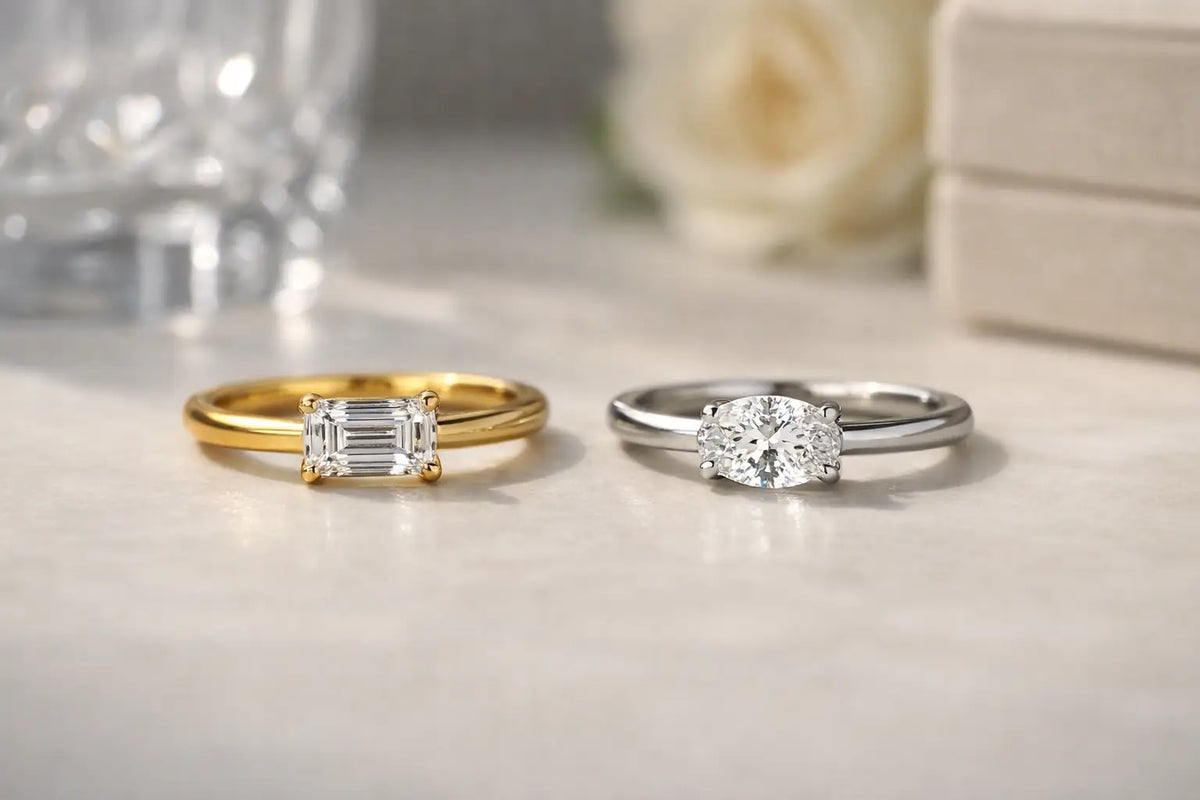
For oval, cushion, emerald, radiant, and princess-cut diamonds, four prongs are often a natural match because the corner placement follows the stone’s geometry. An oval diamond with four refined claw prongs can look exceptionally elongated and airy. Emerald and radiant cuts also benefit from an open setting that lets their clean lines remain visible.
Fancy shapes with pointed ends require more specialized protection. Pear, marquise, and heart-shaped diamonds are vulnerable at their tips, where a sharp point may be more susceptible to chipping if struck. These styles often use a V-prong at the point, sometimes paired with additional prongs elsewhere. In these cases, the question is not simply four versus six. It is whether the setting protects the shape’s most delicate areas without obscuring its beauty.
Sparkle, Cleaning, and Everyday Wear
Because four-prong settings expose more of the diamond, they make it easier to admire the stone from multiple angles. They can also be slightly easier to clean at home, as there is less metal around the girdle where lotion, soap, and daily residue can collect.
Six-prong settings require the same straightforward care, but a little more attention around the extra metalwork. Gentle cleaning with warm water, mild soap, and a soft brush can restore brightness between professional cleanings. Avoid harsh chemicals and remove fine jewelry before activities that could knock, scratch, or pull at the setting.
Snagging is another consideration. Prongs that sit too high or are poorly finished can catch on fabric, regardless of how many there are. A thoughtfully designed setting with smooth, properly aligned prongs will feel comfortable against clothing and everyday surfaces. The height of the setting, the profile of the band, and the finishing quality all matter as much as the number of prongs.
How to Choose Between Four and Six Prongs
Choose four prongs if you love an open, modern presentation and want the diamond’s outline to take center stage. It is particularly compelling for elongated shapes and for anyone who prefers a clean, understated setting that allows a lab-grown diamond’s size and brilliance to speak for itself.
Choose six prongs if you are drawn to timeless elegance, want extra points of contact around a round center stone, or appreciate a more romantic, detailed silhouette. It is a confident choice for a classic solitaire that will feel relevant through changing trends.
Metal color can also shape the final look. White gold prongs tend to blend into a near-colorless diamond, creating an uninterrupted impression of brilliance. Yellow gold or rose gold bands with white gold prongs offer a thoughtful combination: warm color on the hand and a bright, discreet frame around the diamond. Matching prongs and band metal create a more uniform, traditional finish.
A setting should never be selected in isolation. Consider the diamond’s shape and carat weight, the width of the band, your daily routine, and the jewelry you already wear. A petite band with a substantial diamond may feel more balanced with six delicate prongs, while a refined four-prong setting can bring welcome lightness to a larger stone.
The most enduring ring is not the one that follows a rule. It is the one that makes you pause when it catches the light, knowing every detail - from the certified lab-grown diamond to the prongs that hold it close - was chosen to reflect your life and your style.