East West Diamond Rings With Modern Elegance
A diamond’s orientation can change the entire feeling of a ring. East west diamond rings turn an elongated stone sideways across the finger, creating a look that is distinctive, balanced, and effortlessly modern. The design is a refined choice for someone drawn to timeless diamonds but ready for a silhouette that feels more personal than expected.
Rather than changing the diamond itself, an east-west setting changes the way you experience it. A radiant cut becomes architectural. An oval feels softer and more fashion-forward. A marquise takes on a sleek, sculptural presence. The result is fine jewelry with a confident point of view - designed to catch the light and invite a second look.
Why East West Diamond Rings Feel So Distinctive
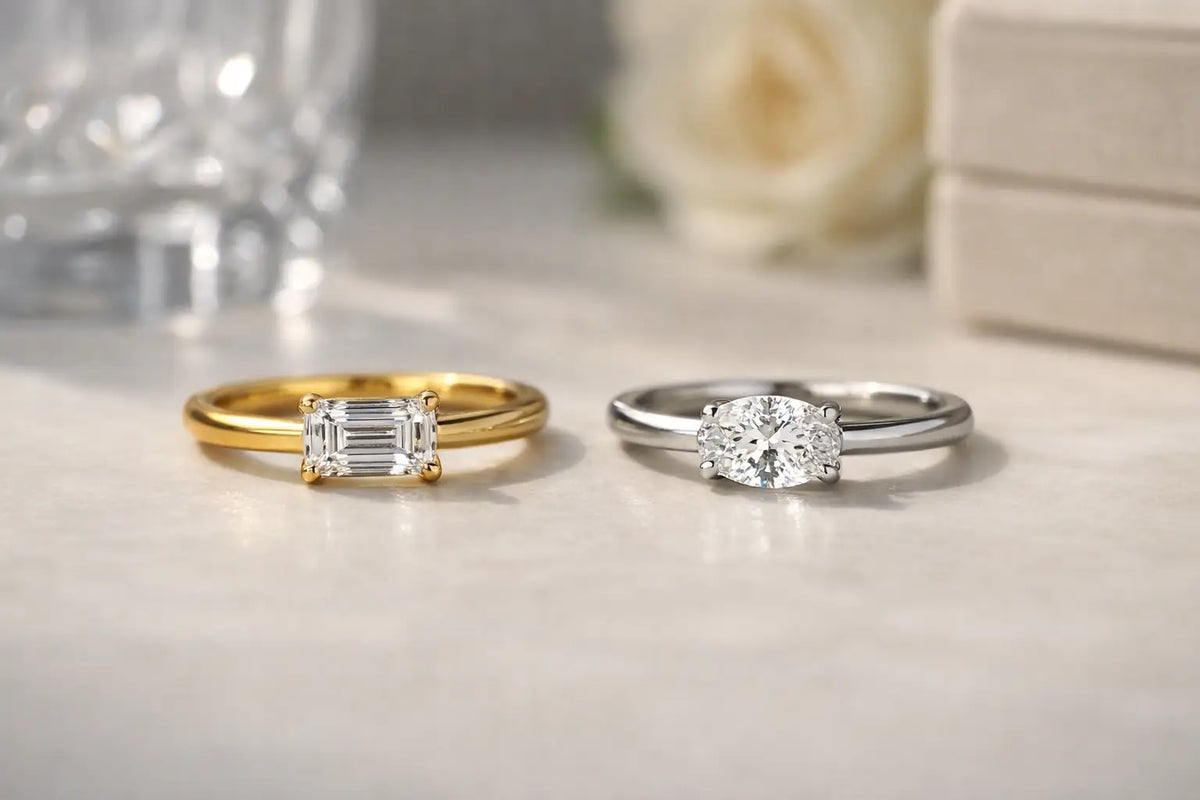
Traditional engagement-style rings position an elongated diamond vertically, with the point or longer axis running toward the hand. In an east-west design, that same axis runs horizontally from side to side. It is a simple adjustment with a dramatic visual effect.
The horizontal placement often makes the ring feel wider across the finger, emphasizing the diamond’s shape rather than simply its carat weight. It also gives a familiar cut a fresh identity. For those who appreciate classic materials and elevated design, this orientation offers a thoughtful middle ground: recognizable enough to feel enduring, unconventional enough to feel entirely your own.
East-west rings are especially compelling as engagement rings, anniversary gifts, and meaningful self-purchases. They suit a wearer who sees jewelry as more than an accessory. It is a marker of taste, a celebration, or a piece that tells a story without following every expected rule.
The Best Diamond Shapes for an East-West Setting
Not every diamond shape benefits equally from a horizontal orientation. Elongated cuts are the natural stars because their proportions create a clear, intentional line across the band.
Oval diamonds
An oval diamond is among the most sought-after choices for an east-west ring. Its rounded outline keeps the design soft and fluid, while the horizontal placement gives it a contemporary edge. Ovals can appear beautifully expansive across the finger, particularly when paired with a slim, polished band.
When selecting an oval, look closely at its outline and light performance. Some stones show a visible bow-tie shadow across the center, while others offer a more even distribution of brilliance. The ideal choice depends on your preference, but a well-cut oval should look lively in motion, not flat or dark.
Emerald-cut diamonds
An east-west emerald cut has a quiet, architectural elegance. Its clean lines and step-cut facets produce flashes of light rather than the glittering sparkle of a brilliant cut. This makes it an exceptional choice for minimalists and those who favor tailored style.
Clarity matters more with emerald cuts because their open facets can reveal internal characteristics more readily. A high-quality lab-grown diamond with a clean, transparent appearance lets the geometry of the cut take center stage.
Radiant-cut diamonds
Radiant cuts combine a rectangular silhouette with brilliant-cut faceting, making them an ideal balance of crisp structure and vibrant sparkle. Set east-west, a radiant diamond feels polished and modern, with enough fire to stand out in a simple solitaire setting.
This shape also works beautifully for buyers who love the look of an emerald cut but want more scintillation. A ratio that is not overly long can create a particularly balanced horizontal profile.
Marquise diamonds
A marquise diamond set east-west is bold, elegant, and unmistakably individual. Its pointed ends form a graceful sweep across the hand, while its elongated outline can create an impressive visual presence. Protective prongs at each point are essential, since the tips are the most vulnerable areas of the stone.
Pear-shaped diamonds can also be set horizontally, usually with the point facing outward or inward depending on the desired look. This creates an asymmetrical effect that feels artistic and personal rather than strictly traditional.
Choosing a Setting That Supports the Design
The setting determines whether an east-west diamond ring feels delicate, dramatic, vintage-inspired, or distinctly contemporary. It also affects how well the diamond is protected in daily wear.
A classic prong setting keeps the focus on the stone and allows generous light to enter from multiple angles. Four or six carefully placed prongs can frame an oval, radiant, or emerald-cut diamond with minimal visual interruption. For marquise and pear shapes, prongs should secure the pointed ends as well as the sides.
A bezel setting offers a more streamlined alternative. Metal wraps around all or part of the diamond’s perimeter, creating a clean outline and added protection. This is an excellent option for an active lifestyle or for someone who prefers jewelry with a low-profile, modern finish. The trade-off is that a full bezel may cover more of the diamond’s edge, subtly changing how large the stone appears.
A half-bezel setting provides another sophisticated option. It leaves portions of the diamond visible while securing it at key points, highlighting the stone’s shape with an airy, sculptural effect. For a more dimensional design, consider a hidden halo or delicate pavé band. These details can add light and presence without taking attention away from the center diamond.
Metal Choices That Change the Mood
The metal you choose becomes part of the ring’s visual language. White gold creates a crisp, luminous frame that blends beautifully with a colorless or near-colorless lab-grown diamond. It is an especially natural match for sleek emerald and radiant cuts.
Yellow gold brings warmth and contrast. Against a bright white diamond, it creates a rich, timeless look that feels both classic and current. A yellow-gold east-west oval can be softly romantic, while a yellow-gold marquise feels daring and expressive.
Rose gold offers a subtle blush tone that lends softness to a modern setting. It is less traditional than white or yellow gold, which can make it an appealing choice for a ring designed around individuality. The best metal is ultimately the one that complements your existing jewelry, skin tone preferences, and the way you want the ring to feel every day.
How to Choose the Right Lab-Grown Diamond
Lab-grown diamonds have the same essential optical, chemical, and physical characteristics as mined diamonds. They offer the brilliance and durability expected of fine diamond jewelry, along with a more accessible path to meaningful carat weight and exceptional quality.
For an east-west design, start with shape and proportion. Because the diamond is displayed horizontally, its length becomes the visible width of the ring. A longer stone creates a more dramatic spread, while a moderately proportioned stone can feel balanced and understated.
Then consider cut, color, clarity, and carat weight together rather than treating any single grade as the only measure of beauty. A beautifully cut diamond often appears brighter and more compelling than a larger stone with weaker light performance. For step-cut shapes such as emerald cuts, prioritize a clean appearance and elegant transparency. For ovals, radiants, and marquise diamonds, look for lively brilliance and an outline you love.
Certification provides valuable reassurance when shopping online. A certified lab-grown diamond gives you a clear record of its key characteristics, helping you compare options confidently. At OROLEV, the focus is on pairing certified lab-grown diamonds with refined settings and premium materials, so each piece feels as considered as the moment it represents.
Styling an East-West Ring for Everyday Wear
One of the strengths of this design is its versatility. An east-west solitaire can stand alone with quiet confidence, especially in a clean gold setting. It can also be paired with curved or contour bands that follow the ring’s profile, creating a layered look without crowding the center stone.
If you plan to stack rings, consider the height of the setting and the width of the center diamond. A low-set horizontal stone may sit closer to a straight band, while a wider oval or marquise often looks best alongside a gently curved wedding band. Try on different proportions when possible, or compare measurements carefully when shopping online.
Care is straightforward but worthwhile. Remove your ring for strenuous exercise, gardening, and tasks involving harsh chemicals. Clean it occasionally with warm water, mild soap, and a soft brush, then have the setting checked periodically to ensure the prongs remain secure. Fine jewelry is made to be worn and enjoyed, but thoughtful care helps preserve its brilliance for years.
An east-west diamond ring does not need to be chosen for its novelty alone. Choose it because the silhouette feels right on your hand, because the diamond shape speaks to your style, and because its modern elegance makes an enduring material feel newly personal.