How to Measure Ring Size at Home With Confidence
A ring can be beautifully designed, set with a brilliant lab-grown diamond, and crafted in a timeless metal - yet the experience changes completely if it does not fit well. Knowing how to measure ring size before you order gives you the confidence to choose jewelry that feels as refined as it looks.
For the most accurate result, use more than one method when possible. Fingers naturally change slightly throughout the day, and details such as band width, knuckle shape, and weather can influence the fit. A few careful minutes now can help make a meaningful purchase feel effortless from the first wear.
How to Measure Ring Size Using a Ring You Already Own
The easiest at-home method is to measure a ring that already fits the intended finger comfortably. Choose a ring worn on the same hand and finger whenever possible. Ring sizes can vary from one finger to another, and the dominant hand is often slightly larger.
Place the ring flat on a ruler and measure the inside diameter, from one inner edge of the band to the opposite inner edge. Do not include the metal itself in your measurement. Record the diameter in millimeters, then compare it with a US ring size chart.
As a general reference, an inside diameter of approximately 16.5 mm corresponds to a US size 6, while 17.3 mm is close to a size 7 and 18.1 mm is close to a size 8. Because even a fraction of a millimeter can affect the result, a ruler with millimeter markings is far more reliable than measuring in inches.
This method works especially well for a gift when borrowing a ring is possible. Just be sure the ring was actually worn on the finger you are sizing. A favorite pinky ring, for example, will not provide a useful estimate for an engagement ring finger.
Measure Your Finger With Paper or String
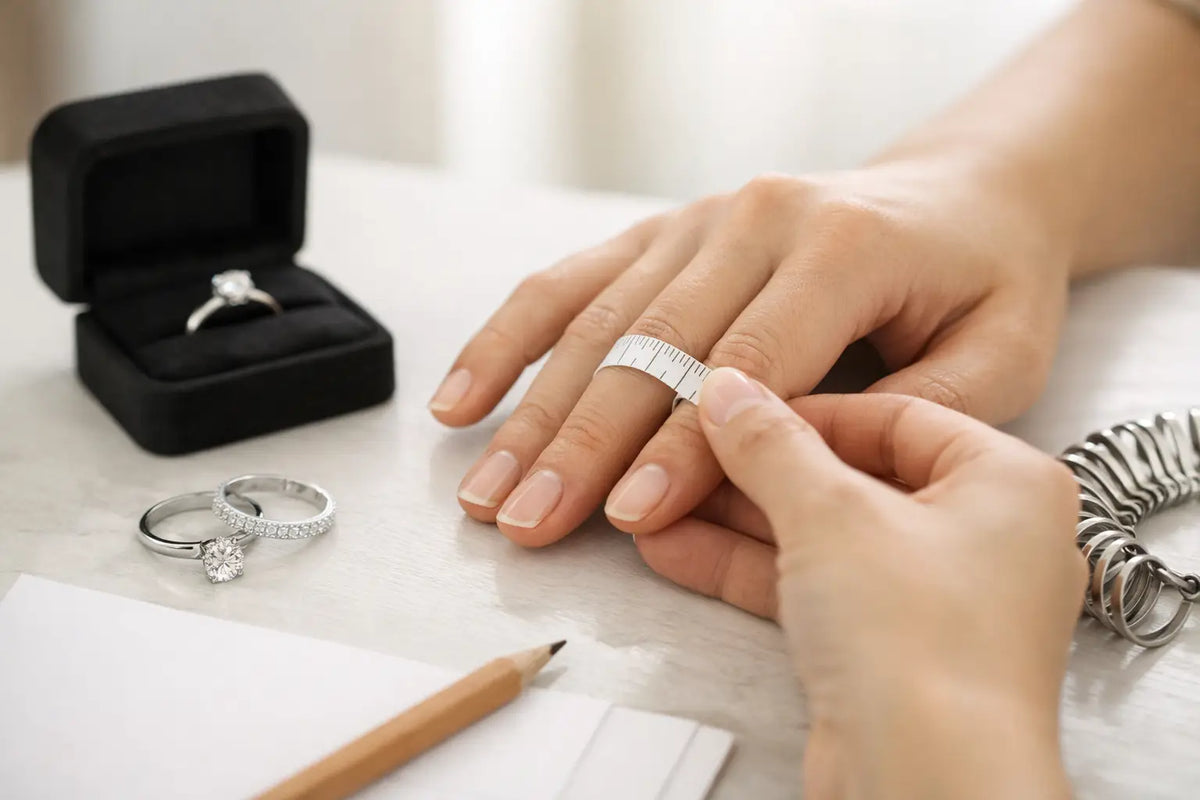
If there is no existing ring to measure, a narrow strip of paper is a practical alternative. Wrap it around the base of the intended finger, where the ring will sit. The paper should be snug but not tight. Mark the point where the ends meet, lay the strip flat, and measure its length in millimeters.
That measurement is your finger circumference. A circumference of about 51.9 mm typically aligns with a US size 6, 54.4 mm with a size 7, and 57.0 mm with a size 8. Compare your result to a reliable US sizing chart and use the closest matching size.
String can work in the same way, but it is easier to pull too tightly or stretch slightly while measuring. If you use it, repeat the process at least twice and compare the results. A strip of paper is usually the more dependable choice because it holds its shape and creates a clearer mark.
Avoid measuring with a tape measure that is too wide or thick. It may not sit naturally around the finger and can make a ring size appear larger than it is.
Check the Knuckle, Not Just the Finger Base
Many people have knuckles that are wider than the base of the finger. In that case, measure both areas. Your ring should pass over the knuckle with gentle resistance, then settle securely at the base without pinching or spinning excessively.
If the two measurements differ noticeably, choose a size between them or lean toward the larger option. This is particularly relevant for a ring worn daily, since comfort matters just as much as a close visual fit. A jeweler can also discuss sizing beads or other adjustments if a ring needs a more tailored feel later.
The Best Time of Day to Measure Ring Size
Measure when your hands are at a normal temperature and your body is relaxed. Late afternoon or early evening is often ideal, since fingers can be a little larger later in the day than they are first thing in the morning.
Cold weather may cause fingers to contract, while heat, exercise, salty meals, travel, and hormonal changes can create temporary swelling. Do not measure immediately after a workout, a hot shower, or coming in from cold outdoor weather. Wait until your hands return to their usual state.
For a more confident result, measure on two or three different occasions. If your measurements fall between standard sizes, the best choice depends on the ring design and how you prefer it to feel.
Consider the Ring Style Before Choosing a Size
Not every ring fits the same way. A delicate solitaire with a slim band generally feels less restrictive than a bold cigar band or a diamond eternity ring. Wider bands cover more of the finger, creating a closer sensation even when the stated size is the same.
For bands wider than about 6 mm, many people prefer to go up by a quarter or half size. This is not an absolute rule - finger shape and comfort preference matter - but it is a helpful starting point. If you are deciding between two sizes for a wider style, the larger size is often the more comfortable choice.
Eternity rings deserve particular care. Because diamonds or gemstones extend around the entire band, resizing can be limited or may alter the original design. Taking the time to confirm the size before ordering is especially valuable for these pieces.
Stacking rings also change the equation. A ring that feels perfect on its own may fit more snugly when paired with two or three bands. If you plan to create a stack, consider choosing a slightly roomier fit for the rings worn together.
How to Find Someone Else’s Ring Size Discreetly
A surprise gift calls for a little strategy. Borrow a ring they wear regularly and measure its inside diameter while they are not around. For best results, choose one worn on the ring finger of the correct hand. In the US, many people wear engagement and wedding rings on the left ring finger, but personal style and cultural tradition vary.
You can also ask a close friend or family member, or invite the recipient to try on rings while browsing without making the occasion feel too obvious. If you must estimate, size 6 to 7 is a common range for women’s ring fingers in the US, but an estimate should only be a last resort.
When selecting a surprise ring, consider the design alongside the size. A classic solitaire or a ring with a design that can be resized more easily provides flexibility. An eternity band or intricate engraved style may offer fewer adjustment options.
When a Professional Ring Sizing Is Worth It
At-home measuring is useful and often accurate, but a professional fitting remains the best option for a significant purchase, particularly an engagement-style ring or a diamond ring intended for everyday wear. A jeweler can assess finger shape, knuckle size, preferred fit, and the effect of a specific band width.
Professional sizing is also wise if your measurements vary by more than half a size, if you have prominent knuckles, or if you are purchasing a ring with a full eternity setting. Fine jewelry should feel secure enough for daily life while still sliding off with a small amount of resistance.
At OROLEV, the goal is not simply to select a number. It is to choose a piece that becomes part of your story - comfortable enough to wear every day and exceptional enough to mark the moments that matter.
A well-fitting ring should never demand your attention. It should rest naturally on your hand, letting its diamond brilliance, considered craftsmanship, and personal meaning take center stage.