Tennis Bracelet Review: What Defines Lasting Value
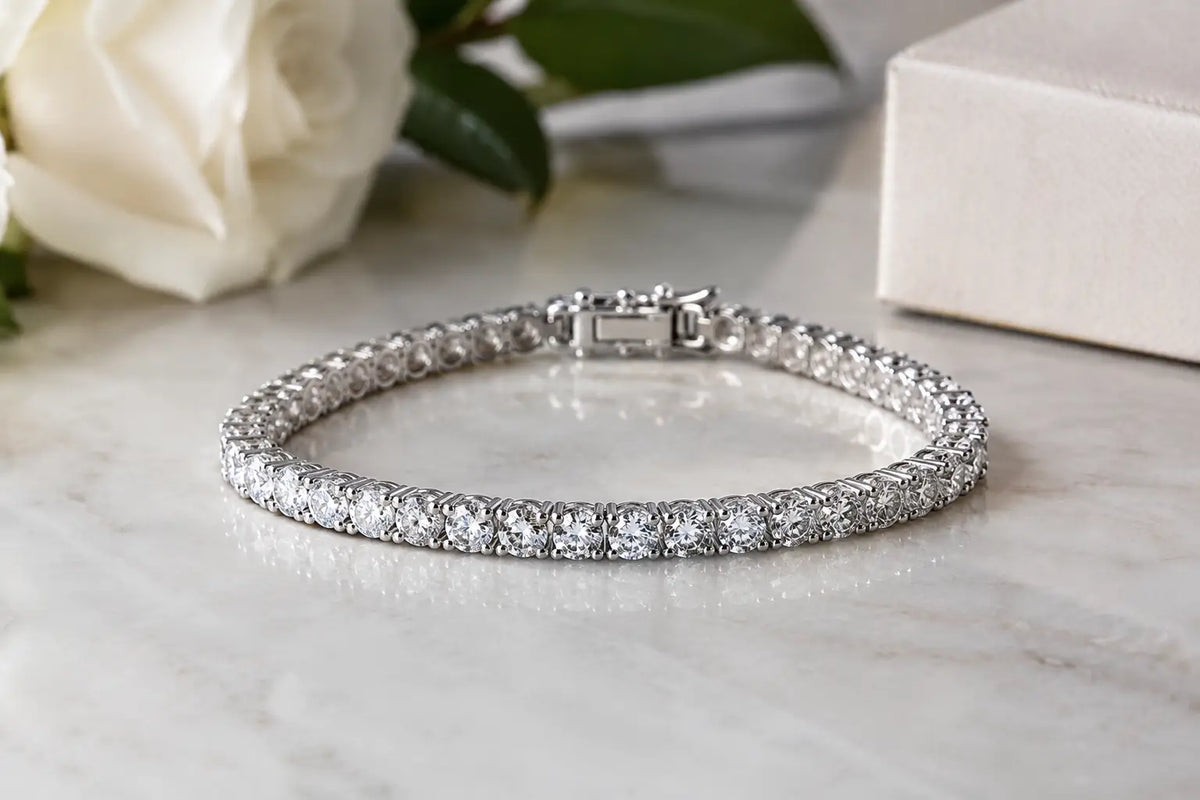
A tennis bracelet earns its place through movement. Each diamond should catch the light individually, then read as one continuous line of brilliance around the wrist. That balance of fluidity, security, and refined sparkle is what makes a thoughtful tennis bracelet review more useful than simply comparing carat totals or price tags.
For a piece designed to be worn often, the details matter. Diamond quality affects its radiance, the setting determines how it wears, and the fit can make the difference between an effortless signature and a bracelet that stays in the jewelry box. A lab-grown diamond tennis bracelet brings another consideration into the decision: exceptional visual beauty and certified quality at a more compelling price-to-carat value.
What a Tennis Bracelet Should Look and Feel Like
The finest tennis bracelets have a quiet confidence. They do not need oversized diamonds or elaborate ornamentation to feel luxurious. Their appeal comes from repetition: precisely matched stones, a polished precious-metal frame, and a silhouette that drapes naturally against the skin.
A well-made bracelet should feel flexible rather than rigid. Individual links allow it to follow the wrist, while a secure clasp and safety mechanism provide reassurance for daily wear. When you hold it, the bracelet should feel substantial without being heavy. When you wear it, it should settle gracefully instead of twisting to one side.
This is why total carat weight is only one part of the story. A 3-carat bracelet with consistently bright, well-matched diamonds can appear more elevated than a larger piece with uneven color, inconsistent proportions, or a stiff construction. True refinement lives in the continuity.
Tennis Bracelet Review: The Details Worth Comparing
Diamond cut and matching
Cut is the first feature to assess because it creates the sparkle most people notice. Round brilliant diamonds remain the classic choice for a tennis bracelet because their faceting delivers bright white light from nearly every angle. They also create the familiar, uninterrupted shimmer associated with this design.
More importantly, the diamonds should be visually matched. Look for consistency in size, shape, color, and clarity across the entire bracelet. A slight variation may not be obvious in a product description, but it can disrupt the clean line of light once the bracelet is on the wrist.
Lab-grown diamonds are chemically, physically, and optically diamonds. Their brilliance is not a compromise. The benefit is the ability to prioritize a generous, coordinated diamond layout while keeping the investment more approachable than an equivalent mined-diamond design.
Color and clarity
For a diamond tennis bracelet, near-colorless diamonds often offer the most balanced combination of beauty and value. In white gold, diamonds in the colorless to near-colorless range tend to look crisp and luminous. Yellow gold can be more forgiving of a subtle warmth, especially if you prefer a softer, warmer overall effect.
Clarity should be evaluated with real-world wear in mind. A bracelet is viewed at arm's length and in motion, not under magnification. Eye-clean diamonds with no visible inclusions generally provide the beautiful, polished appearance most buyers want, without paying for characteristics that cannot be seen in everyday life.
The right specifications depend on your priorities. If maximum icy brilliance is the goal, choose higher color and clarity grades. If you want the strongest carat presence for your budget, carefully selected near-colorless, eye-clean stones can be an exceptionally elegant choice.
Setting style and security
Most classic tennis bracelets use prong settings, which expose more of each diamond to light and create a bright, airy look. Four-prong settings are a timeless option that offers a balanced amount of protection. Three-prong settings can create a more continuous line of diamonds, though they reveal slightly more of each stone's edge.
Bezel settings offer a different aesthetic. Each diamond is framed in metal, creating a sleek, modern profile with excellent protection. The trade-off is that less light enters from the sides, so the look is more polished and graphic than traditionally scintillating.
No matter the setting, inspect the clasp details. A box clasp paired with safety latches is a reassuring choice for a fine diamond bracelet. It should close with a confident click and sit smoothly against the wrist. Security is not a minor detail here - it is part of the design's lasting value.
Choosing the Right Diamond Size and Carat Weight
There is no universally ideal carat weight for a tennis bracelet. The most flattering choice depends on your wrist size, personal style, and how you plan to wear it. Delicate bracelets offer a subtle ribbon of light and layer beautifully beside a watch or other gold jewelry. Larger diamonds create a more expressive presence and can stand alone as the centerpiece of an evening look.
Diamond size changes the character of the piece as much as total carat weight. Smaller stones create a fine, continuous sparkle that feels understated and versatile. Mid-sized diamonds deliver a recognizable luxury statement without overwhelming the wrist. Larger stones have dramatic fire and greater visual separation, which some buyers love and others may find less suited to everyday styling.
Think about proportion before choosing the biggest available option. A bracelet should complement your hand and wrist while still reflecting your point of view. The most enduring choice is usually the one you will reach for without needing a special occasion.
Metal Choice Changes the Entire Look
White gold is a natural partner for lab-grown diamonds because its cool sheen emphasizes their brightness and creates a clean, contemporary finish. It is a particularly strong choice for those who prefer platinum-like radiance with the warmth and tradition of gold.
Yellow gold adds contrast. The golden setting outlines each diamond more distinctly, giving a classic tennis bracelet a warmer, more personal character. It also pairs beautifully with mixed-metal jewelry and can make the bracelet feel less formal for everyday wear.
Fourteen-karat gold is a practical standard for a piece meant to be enjoyed regularly. Its balance of gold content and durability makes it well suited to bracelet construction, where links and clasps experience more movement than a ring or pendant. Whichever metal you choose, consider the jewelry you already wear most often. A tennis bracelet should feel like an extension of your collection, not an isolated purchase.
Fit Is a Luxury Detail, Not an Afterthought
A tennis bracelet should have enough room to move slightly, but not so much that it rotates constantly or catches on clothing. As a general starting point, measure your wrist and add around half an inch to three-quarters of an inch. Preferences vary: some people love a closer, tailored fit, while others prefer a more relaxed drape.
If you are between sizes, consider how the bracelet will be styled. A solo bracelet can sit a little closer to the wrist. If you plan to stack it with bangles, a watch, or other diamond pieces, a touch more room may feel more comfortable.
The goal is graceful movement. When the bracelet slides gently across the wrist and the diamonds remain visible from the top of the hand, the proportion is likely right.
Value Beyond the First Impression
A meaningful tennis bracelet review should account for ownership, not only the first moment of sparkle. Fine jewelry deserves clear information about diamond certification, metal quality, craftsmanship, returns, and long-term care. These details protect your confidence after the box is opened.
At OROLEV, the appeal of lab-grown diamond jewelry is rooted in this complete view of value: certified diamonds, refined design, and a responsible alternative that allows more of the investment to go toward visible beauty. A lifetime warranty and a thoughtful return policy add practical reassurance to an emotional purchase.
For care, remove your bracelet before vigorous exercise, swimming, or using household chemicals. Store it separately to prevent diamonds from scratching other jewelry, and have its settings checked periodically if it is worn frequently. A gentle cleaning will restore the light performance that makes the design so captivating.
The right tennis bracelet is not simply a row of diamonds. It is a piece of daily elegance, chosen with enough care that every flash of light feels distinctly yours.