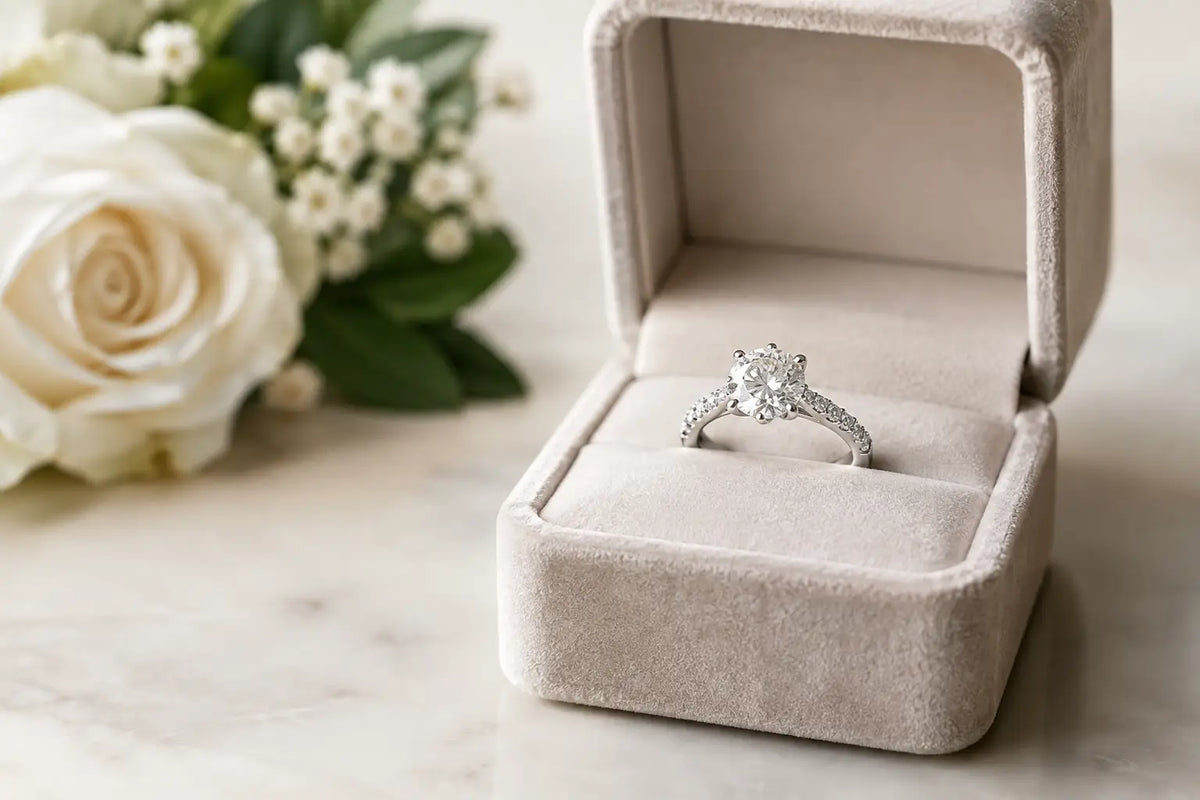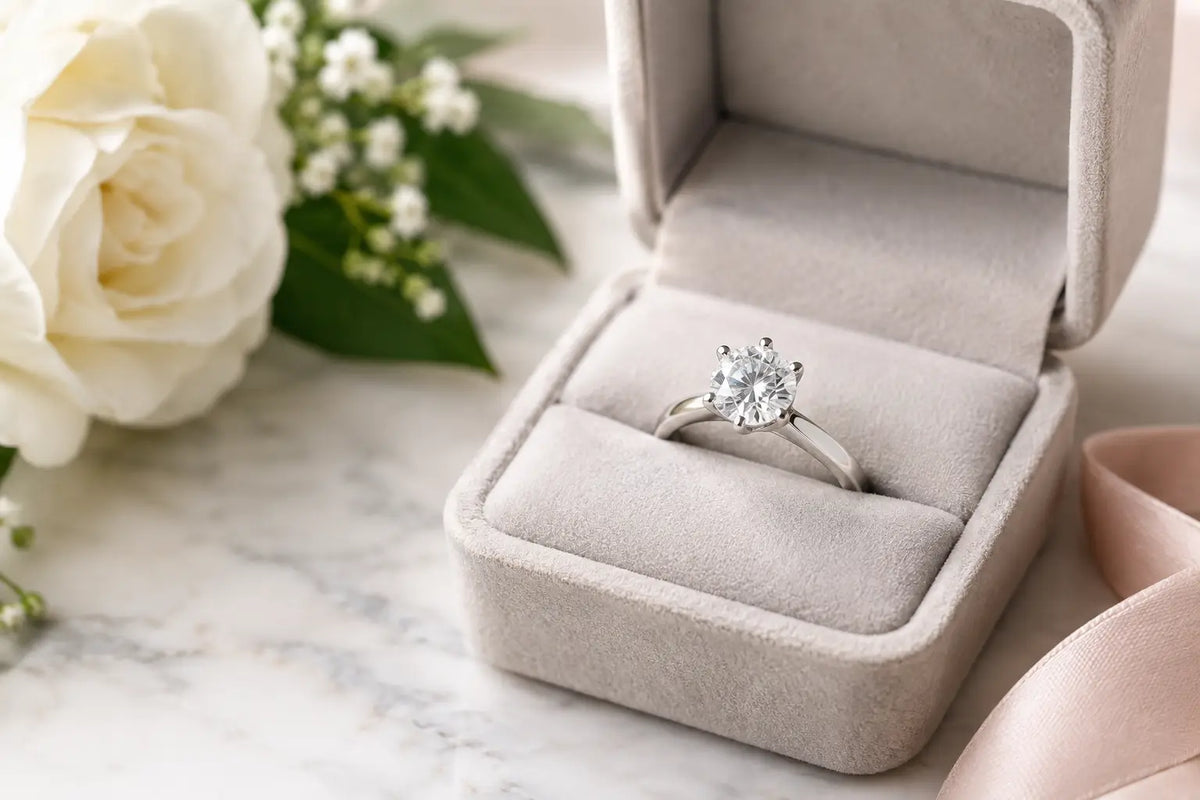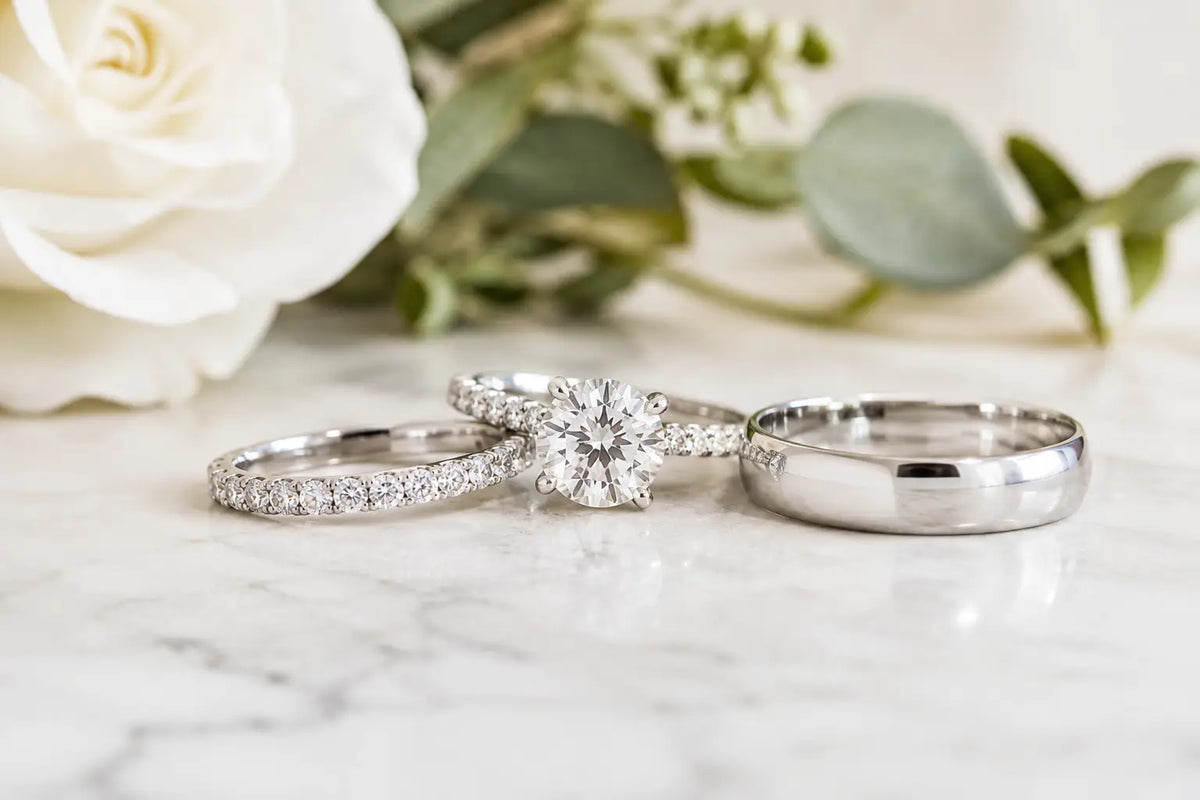
How to Match Wedding Bands With Your Ring
Your wedding band will sit beside one of the most meaningful pieces of jewelry you will ever own. The right pairing does more than coordinate metal and diamonds - it creates a balanced, comfortable stack that feels like it was designed as one. Knowing how to match wedding bands begins with looking closely at your engagement ring, then deciding which details deserve to echo and which can stand beautifully apart.
There is no single formula for a perfect match. A classic solitaire may call for a slim pavé band, while an ornate vintage-inspired ring can look more refined beside a clean, unadorned band. The goal is not strict sameness. It is a considered pairing that reflects your style, fits your hand comfortably, and remains timeless long after the wedding day.
Start With Your Engagement Ring
Your engagement ring establishes the visual language for the stack. Before choosing a wedding band, consider its metal color, setting height, diamond shape, band width, and overall personality. These details will help you recognize whether your ideal band should blend in quietly or offer intentional contrast.
A low-set engagement ring, for example, may leave little room for a straight band to sit flush against it. A high-set solitaire often gives you more flexibility, allowing a straight pavé, channel-set, or plain gold band to nest neatly beneath the center stone. If a small gap remains, that is not a flaw. Many modern ring stacks look elegant with a subtle space between bands, especially when the proportions feel deliberate.
Consider the ring's silhouette
Look at your engagement ring from above and from the side. A round, oval, pear, or marquise center stone has a distinct outline that can influence the wedding band's shape. Curved, contoured, and notched bands are designed to follow these silhouettes, making them a thoughtful choice when a straight band would press against the setting.
For a ring with a large center stone or prominent basket, a gently curved band can create a close, polished fit. For an emerald-cut or radiant-cut diamond with crisp geometry, a straight band often complements its clean lines beautifully. The most flattering option is usually the one that gives each ring room to be seen.
Match the Metal for a Cohesive Look
Matching metal is the simplest way to create a unified wedding set. If your engagement ring is 14K yellow gold, a 14K yellow gold band in a similar finish will create continuity while still allowing for differences in diamond detail or texture. The same principle applies to white gold and rose gold.
That said, mixed metals can feel exceptionally personal. A white gold engagement ring with a yellow gold wedding band offers subtle warmth and dimension, particularly if you already wear both tones in your everyday jewelry. The key is repetition: a two-tone stack appears more intentional when one metal appears elsewhere in the ring design, such as yellow gold prongs on a white gold setting.
Metal purity also affects color and durability. Choosing the same karat weight generally gives your bands a more consistent appearance over time. If you prefer a softer yellow tone or a particular finish, compare the rings side by side in natural light before making a final decision.
Choose a Band Width That Feels Balanced
Band width is one of the most overlooked parts of how to match wedding bands, yet it can change the entire effect of a stack. A very thin wedding band beside a wide engagement ring may look delicate and airy. A similarly wide band can feel bold, structured, and more substantial.
There is no rule that widths must match exactly. In fact, slight variation often looks more modern. A 1.5 mm pavé band can add a fine line of brilliance beside a 2 mm solitaire shank, while a wider plain gold band can ground a slender diamond engagement ring. What matters is visual balance and everyday comfort.
Try on multiple widths if possible. Pay attention to how the rings look when your hand is relaxed, not only when held upright for a photo. Your stack should feel proportionate from every angle and should not make your fingers feel crowded.
Think about diamond scale
If you are pairing diamond bands, compare the size and style of the stones. A wedding band with diamonds that are noticeably larger than those on the engagement-ring shank can become the focal point, which may be exactly what you want. For a quieter, cohesive effect, select diamonds that are similar in size or slightly smaller.
Lab-grown diamonds offer a beautiful opportunity to achieve this balance without compromising on brilliance. Because they share the same optical, chemical, and physical properties as mined diamonds, they allow you to choose a refined diamond band with exceptional sparkle and strong value. A certified lab-grown diamond wedding band can also make it easier to prioritize the cut, color, and clarity details that matter most to you.
Select a Setting That Works Together
The setting style influences both the look and wearability of your rings. Pavé bands bring light-catching detail and pair naturally with engagement rings that feature diamond accents. Channel-set bands have a smooth, tailored finish that suits contemporary styles and offers added protection for the diamonds. Bezel-set bands feel sleek and architectural, especially next to a bezel solitaire or a minimalist engagement ring.
A plain metal wedding band is never merely a fallback. Its uninterrupted surface can make a diamond engagement ring appear even brighter, while its durability makes it an excellent choice for an active lifestyle. It also gives you freedom to add anniversary bands later without creating too much visual competition.
If your engagement ring has intricate details, such as a hidden halo, milgrain edges, or a floral setting, decide whether you want the wedding band to repeat that motif. Repeating one detail can create a composed set. Repeating every detail can make the stack feel overly busy. Often, a simple diamond band is the most elegant companion to a detailed center ring.
Decide Whether You Want a Flush Fit
A flush fit means the wedding band rests directly against the engagement ring with no visible space. Many people love this classic, tailored look, but it is not always possible with certain settings. A low basket, halo, or cathedral design may require a contoured band or leave a small gap with a straight ring.
Do not force two rings together if they rub, push against the center setting, or cause either piece to sit at an angle. Constant friction can wear down metal and may affect delicate pavé settings over time. A small, intentional gap is preferable to a stack that puts pressure on the rings.
If you love the appearance of a close fit, choose a contour band made specifically to follow the engagement ring's profile. These bands can be softly curved or more dramatically shaped, depending on the center stone and setting. They should feel like a natural extension of the ring, not an afterthought.
Make Comfort Part of the Design
A wedding band is designed for daily life. Consider how it feels while typing, exercising, carrying a bag, or holding a child's hand. A comfort-fit interior, with its gently rounded inner edge, can make a meaningful difference if you are not used to wearing rings every day.
Also consider the height of the finished stack. Two rings with high profiles may catch more easily on clothing or hair, while a low-profile pairing feels understated and practical. For many couples, the most luxurious choice is not the most elaborate one. It is the one that remains effortless to wear.
Your ring size may also need adjustment once two bands are worn together. Stacked rings can fit more snugly than a single ring, particularly in warm weather. A professional sizing consultation helps ensure both comfort and security.
Let Your Stack Tell Your Story
The most compelling wedding sets balance design with meaning. You may choose a diamond eternity band to mark a milestone, a curved band that frames the center stone you fell in love with, or a polished gold band that feels enduring in its simplicity. Your rings do not need to follow tradition perfectly to feel timeless.
At OROLEV, modern fine jewelry is designed to bring together exceptional brilliance, considered craftsmanship, and the confidence of certified lab-grown diamonds. Whether your vision is a perfectly aligned bridal set or a more individual stack, choose the pairing that feels refined on your hand and true to your life together.