How to Layer Diamond Necklaces With Ease
A single diamond necklace brings light to the neckline. A considered stack creates dimension, movement, and a more personal expression of style. Learning how to layer diamond necklaces is less about wearing as many pieces as possible and more about balancing sparkle, scale, and space so every diamond has a reason to be there.
The most elegant combinations feel intentional without looking overly coordinated. Start with pieces you genuinely want to wear, then use length, silhouette, and metal color to build a look that feels distinctly yours.
How to Layer Diamond Necklaces With Proportion
Proportion is the foundation of a diamond necklace stack. Each necklace should occupy its own visual space, allowing the diamonds to catch the light individually rather than competing in one bright cluster. For most necklines, a difference of at least two inches between chains creates the cleanest separation.
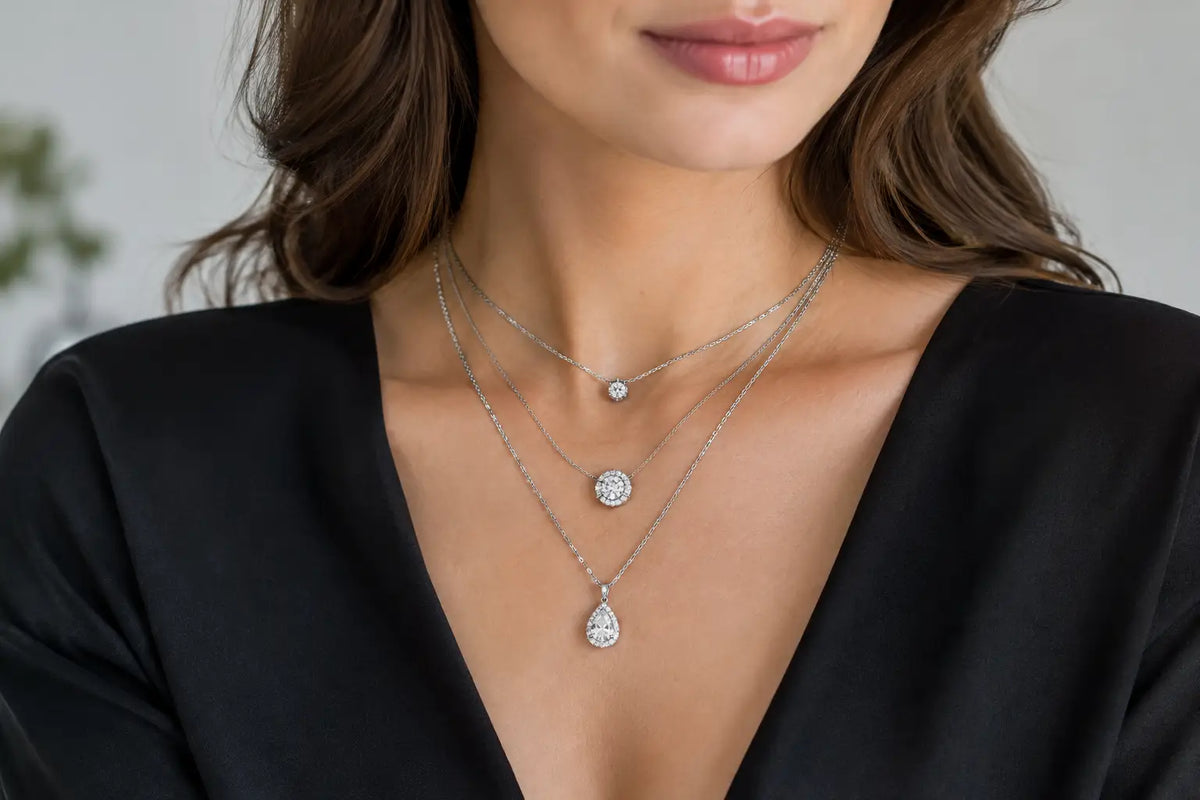
A polished three-necklace combination might begin with a 16-inch diamond choker or delicate solitaire, add an 18-inch pendant necklace, and finish with a 20- or 22-inch piece. This creates a soft descending line that draws the eye naturally down the neckline. If you prefer a more minimal look, two necklaces can be just as refined: a close-fitting tennis necklace paired with a longer bezel-set diamond pendant, for example.
Your height, neck length, and the neckline of your clothing can influence the ideal spacing. A high-neck top often calls for a longer pendant or a single statement layer, while an open neckline provides room for a fuller composition. There is no universal formula. The goal is to create breathing room around each piece.
Begin With an Anchor Piece
Choose one necklace to act as the focal point. It may be a meaningful diamond pendant, a classic tennis necklace, an initial design, or a solitaire that sits close to the collarbone. Your anchor has the strongest visual presence, whether that comes from diamond size, a distinctive shape, or sentimental value.
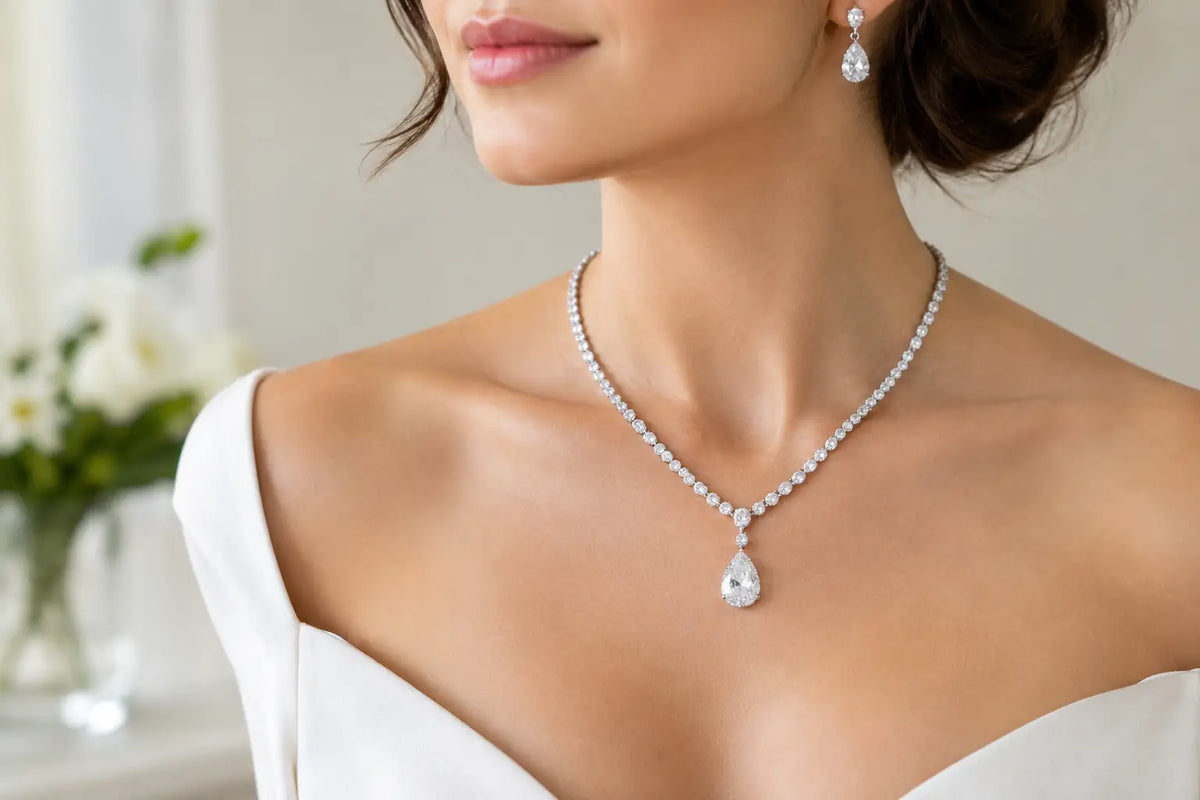
Once you have selected it, let the other necklaces support rather than outshine it. A bold emerald-cut diamond pendant, for instance, pairs beautifully with a fine chain above it and a subtle station necklace below it. A diamond tennis necklace can become the luminous foundation for a slim pendant that adds length and softness.
This approach also makes everyday styling easier. Rather than reinventing your jewelry each morning, you can build around the necklace you reach for most often.
Create Contrast With Diamond Shapes and Settings
The most memorable layers have a touch of contrast. Mixing diamond shapes and settings adds texture while preserving the timeless elegance of fine jewelry. Pair a round brilliant solitaire with the clean geometry of an emerald-cut pendant, or style a pear-shaped diamond below a delicate row of round diamond stations.
Settings matter as much as shape. Bezel-set diamonds create a smooth, modern profile and are especially useful in layered looks because they sit neatly against the skin and are less likely to catch on another chain. Prong-set solitaires offer more visible light and lift, making them an ideal focal point. Pavé details add concentrated shimmer but generally work best as an accent when other pieces are already diamond-forward.
Avoid repeating the same silhouette at every length unless you want a deliberately uniform effect. Three identical pendants can look formal and symmetrical, but may lose the effortless quality that makes layering so appealing. A variation in form gives each necklace its own role.
Balance Sparkle With Negative Space
More diamonds do not automatically create more impact. In fact, a stack becomes more luxurious when the eye has places to rest. If your shortest necklace is a diamond tennis style, choose a simple fine chain or small solitaire for the next layer instead of another dense line of diamonds.
A useful rule is to combine one high-sparkle piece with one quieter piece and, if desired, one piece with a more personal detail. For example, a diamond choker, a petite bezel-set solitaire, and a longer initial pendant can feel both elevated and intimate. The diamonds set the tone; the personal element tells the story.
This balance also makes a stack more versatile. It can look polished with a silk blouse, understated with a white T-shirt, and special enough for a dinner or celebration.
Choose Metals That Make the Stack Feel Cohesive
Matching metal colors is the simplest path to a unified look. Yellow gold brings warmth to diamond brilliance and gives classic shapes a contemporary richness. White gold offers a crisp, luminous finish that lets the diamonds appear especially bright. If you already wear one metal daily, begin there for a collection that feels natural from the first wear.
Mixed metals can be equally sophisticated when done with intention. A white gold diamond solitaire can look striking beside a yellow gold chain, especially when one metal appears more than once elsewhere in your outfit, such as in earrings, rings, or a watch. The key is repetition. One unexpected metal may look accidental; two or three related touches look designed.
Consider chain texture, too. A fine cable chain, a sleek box chain, and a softly reflective diamond-cut chain each catch light differently. When necklaces are similar in length, varying the chain texture can help prevent them from visually blending together.
Keep Chains From Tangling
Layering should look effortless, but chains naturally move as you do. Lightweight necklaces with pendants can twist around one another, especially if they are nearly the same length or share similarly delicate chains. Choosing clearly staggered lengths is the first defense against tangling.
It also helps to vary chain weight. A slightly more substantial lower chain can stabilize a finer upper layer. Place pendants at different drop points rather than stacking them directly on top of each other. Before leaving the house, check that clasps are positioned at the back of the neck and that each pendant faces forward.
For a stack you wear frequently, a necklace layering clasp can keep chains separate at the closure. It is a practical option for two or three pieces, though it may not suit every necklace style. Extra-long pendant chains and very fine chains may still need occasional adjustment throughout the day. That is simply part of wearing delicate jewelry with movement and ease.
Build a Stack for Your Lifestyle
A beautiful necklace stack should fit your life, not remain reserved for special occasions. If you work in a setting where jewelry needs to feel subtle, start with a fine diamond pendant and a second necklace with small, spaced diamonds. The result reads as polished from a distance while still offering close-up brilliance.
For evenings or meaningful events, add a more substantial piece such as a diamond tennis necklace or an eye-catching pendant with a larger center stone. Lab-grown diamonds make this kind of styling especially compelling: you can prioritize certified quality and impressive visual presence while making a thoughtful, value-conscious choice.
Consider how your other jewelry will participate. If you wear dramatic diamond earrings, keep the necklace layers more restrained. If your earrings are understated, a brighter neckline can take center stage. Rings and bracelets do not need to match exactly, but their metal tone and overall level of sparkle should feel related.
At OROLEV, certified lab-grown diamond jewelry is designed to make these personal combinations feel attainable, from timeless solitaires to pieces that bring a little more radiance to the everyday.
Care for Layered Diamond Necklaces
Fine necklaces deserve a simple care routine, particularly when they are worn together. Put them on after fragrance, lotion, and hair products to reduce residue on the metal and diamonds. At the end of the day, remove each necklace individually rather than pulling the stack off as one.
Store necklaces separately in soft pouches or laid flat in individual compartments. This protects delicate chains from knots and helps preserve the finish of gold settings. A gentle cleaning with warm water, mild soap, and a soft brush can restore brilliance, but inspect clasps and settings periodically as well. If a chain has begun to feel fragile or a stone appears loose, professional service is the right choice.
The best layered look is never the one with the most pieces. It is the combination that makes you feel polished the moment you put it on: a little light at the collarbone, a meaningful detail close to the heart, and diamonds chosen to move with your life.