Diamond Fluorescence Buying Guide for Brilliance
A diamond can look perfectly crisp under a jeweler’s lights, then take on a slightly different personality in direct sunlight or a nightclub’s ultraviolet lighting. That shift is fluorescence, and this diamond fluorescence buying guide is designed to help you decide whether it matters for the piece you have in mind. For most lab-grown diamond jewelry buyers, it is a detail to understand, not a reason to compromise on the brilliance you love.
Fluorescence can influence appearance, price, and how a diamond is described on its grading report. Yet its effect is highly individual. The most refined choice is not automatically a diamond with no fluorescence. It is the diamond that looks luminous, clean, and beautiful to you in the settings where you will wear it.
What Diamond Fluorescence Actually Means
Fluorescence is a diamond’s reaction to ultraviolet light. When exposed to UV rays, some diamonds emit a visible glow, most often blue. Sunlight contains ultraviolet light, as do black lights and certain indoor lighting environments. Once the UV source is removed, the glow disappears.
Fluorescence is a natural optical property, not a surface treatment and not a sign that a diamond is less real. It can occur in both mined and lab-grown diamonds. A laboratory report may grade fluorescence as None, Faint, Medium, Strong, or Very Strong, though terminology can vary slightly by grading laboratory.
Blue is the most common fluorescent color and is generally the least concerning from an appearance standpoint. Less common colors, including yellow, white, or orange, deserve a closer look because they may influence the diamond’s face-up color or transparency differently. The report identifies the fluorescence strength, but it cannot replace viewing the specific stone.
Diamond Fluorescence Buying Guide: Start With Appearance
A fluorescence grade tells only part of the story. Two diamonds with the same fluorescence description can perform differently because cut quality, inclusions, color, and crystal structure all affect what the eye sees. The question is simple: does the diamond look bright and transparent, or does it look hazy?
In the overwhelming majority of cases, None, Faint, and Medium blue fluorescence will not create a visible issue. Many diamonds in these ranges appear identical to non-fluorescent diamonds in everyday wear. Strong or Very Strong fluorescence calls for more careful review, especially in diamonds with high color grades such as D through H.
Occasionally, strong fluorescence can cause a diamond to appear milky, oily, or slightly cloudy in sunlight. This effect is uncommon, but it is the reason buyers should not select a diamond by certificate alone. Request clear images and video, ideally captured in more than one lighting condition, and look for crisp facet definition. A well-cut diamond should return light with lively contrast rather than a soft, foggy appearance.
For an engagement ring, this visual check matters more than a fluorescence label. Your diamond will be seen in daylight, at dinner, in the office, and in the warm glow of an evening celebration. Its beauty should feel consistent wherever your story takes you.
Can Fluorescence Make a Diamond Look Whiter?
It can, under the right conditions. Since blue sits opposite yellow on the color wheel, blue fluorescence may visually offset a slight warm tint in a near-colorless or faint-color diamond when UV light is present. This is why some buyers consider Medium blue fluorescence in an I, J, or K color diamond: it may offer a touch of added brightness outdoors without changing the diamond’s inherent color grade.
This benefit is subtle and lighting-dependent. A diamond does not permanently become a higher color grade because it fluoresces. Under lighting without UV, its body color remains the same. Still, a beautiful near-colorless diamond with blue fluorescence can be a thoughtful value choice when it is transparent and expertly cut.
With colorless diamonds, the calculation is different. A D, E, or F diamond is selected for its exceptionally icy appearance, so buyers often prefer None or Faint fluorescence for maximum predictability. That is a preference rather than a universal rule. A Strong blue fluorescent diamond that appears crystal clear can still be an exceptional stone, particularly if its price creates room for a larger carat weight or a more elevated setting.
How Fluorescence Affects Price and Value
In the traditional diamond market, diamonds with Strong or Very Strong fluorescence have sometimes sold at a discount, particularly in higher color grades. The discount reflects buyer caution about the possibility of haze, not an automatic flaw. If the diamond has been properly evaluated and looks clear, that price difference can represent meaningful value.
For lab-grown diamonds, pricing is influenced by a broader set of factors, including shape, carat weight, cut, color, clarity, certification, and current market supply. Fluorescence may have less impact than it does in mined diamonds, but it remains a specification worth reviewing. Never assume a lower price is a hidden bargain or a warning sign. Compare the complete diamond profile and its visual performance.
A smart budget strategy is to prioritize cut first. An excellent cut has the greatest influence on sparkle and visual size. After that, choose color and clarity ranges that look beautiful to your eye, then consider fluorescence as part of the final comparison. For many shoppers, placing a slightly lower color grade in a white gold or platinum setting can create a bright, refined look while preserving budget for carat weight or craftsmanship.
Fluorescence by Diamond Shape and Jewelry Style
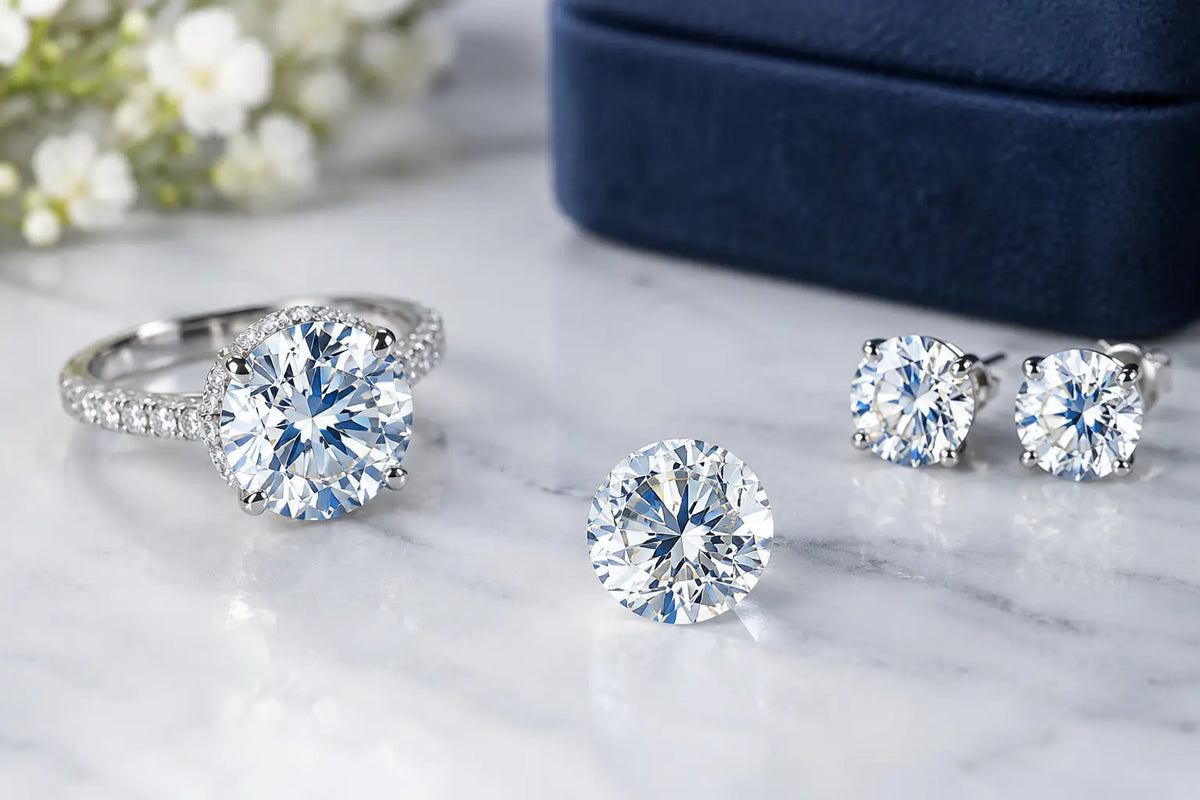
Shape changes how a diamond reveals color and light. Round brilliant diamonds are especially efficient at returning light, which can make small differences in color less noticeable. A round lab-grown diamond with Medium blue fluorescence and a strong cut may appear remarkably bright.
Fancy shapes often show color differently. Emerald cuts and Asscher cuts have broad, open facets that make transparency especially important. If you are considering Strong fluorescence in either shape, scrutinize high-resolution imagery for any loss of crispness. Oval, pear, marquise, and radiant diamonds can offer generous visual spread, but each should still be reviewed for even light performance and pleasing color distribution.
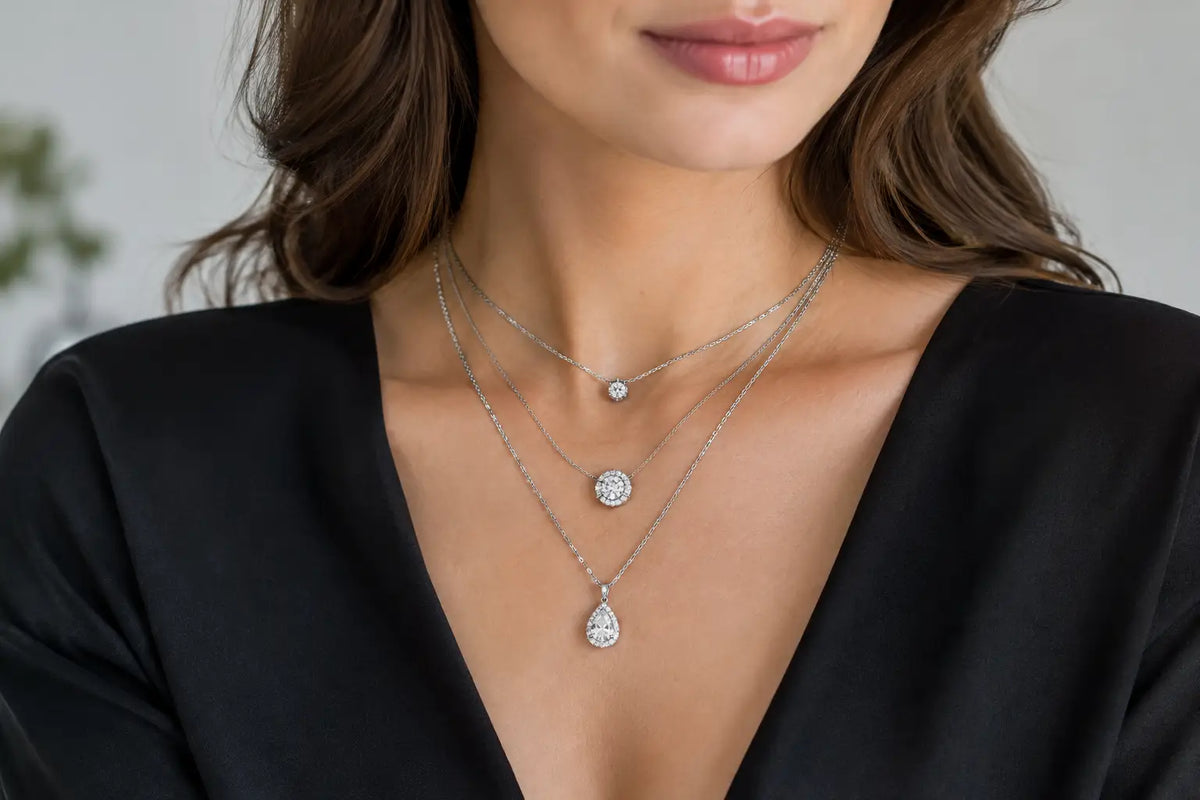
For diamond studs, tennis bracelets, and delicate necklaces, consistency is essential. When a jewelry design features several diamonds, ask whether the stones have been matched for color, clarity, and overall appearance. A faint fluorescent response in a few diamonds is rarely noticeable, but a visibly inconsistent glow under UV lighting could be distracting in an otherwise polished design.
What to Check Before You Buy
Begin with an independent grading report for the center diamond or loose lab-grown diamond you are considering. Confirm the stated fluorescence level and color, then review the full report alongside the diamond’s cut, proportions, color, clarity, and measurements. Certification brings transparency to a purchase that should feel as confident as it is meaningful.
Next, view the diamond rather than relying solely on specifications. Look for videos that show movement and light return. Pay particular attention to Strong and Very Strong fluorescence, and ask directly whether the stone displays any haze, milkiness, or reduced transparency. A reputable jeweler should be able to address that question clearly.
Finally, consider your priorities. If you are pursuing a classic colorless diamond with a highly precise visual brief, None or Faint fluorescence offers reassurance. If you want to maximize size and beauty within a defined budget, a clear diamond with Medium or even Strong blue fluorescence may be worth considering. The right answer depends on the specific stone, not a blanket rule.
A Refined Choice Should Feel Effortless
Fluorescence is one of the many details that make each diamond distinct. It deserves attention, especially when it is strong, but it should never overshadow the qualities that make a piece unforgettable: exceptional sparkle, balanced proportions, a setting that suits your style, and the confidence of certified quality.
Choose the diamond that looks alive in the light, feels true to your standards, and turns an everyday moment into something a little more luminous.