Which Diamond Shape Hides Inclusions Best?
A diamond can be beautifully brilliant without being internally flawless. For shoppers asking which diamond shape hides inclusions most effectively, the answer is usually the round brilliant cut. Its exceptional facet pattern produces lively sparkle that can distract the eye from small internal characteristics. Yet shape is only part of the story. The size, location, color, and type of an inclusion - along with the diamond’s cut quality and setting - determine what you will actually see when you wear it.
Choosing a shape that is naturally forgiving can help you prioritize what matters most: a larger, more luminous lab-grown diamond, a refined setting, or a meaningful piece of fine jewelry that feels unmistakably yours.
Which Diamond Shape Hides Inclusions Best?
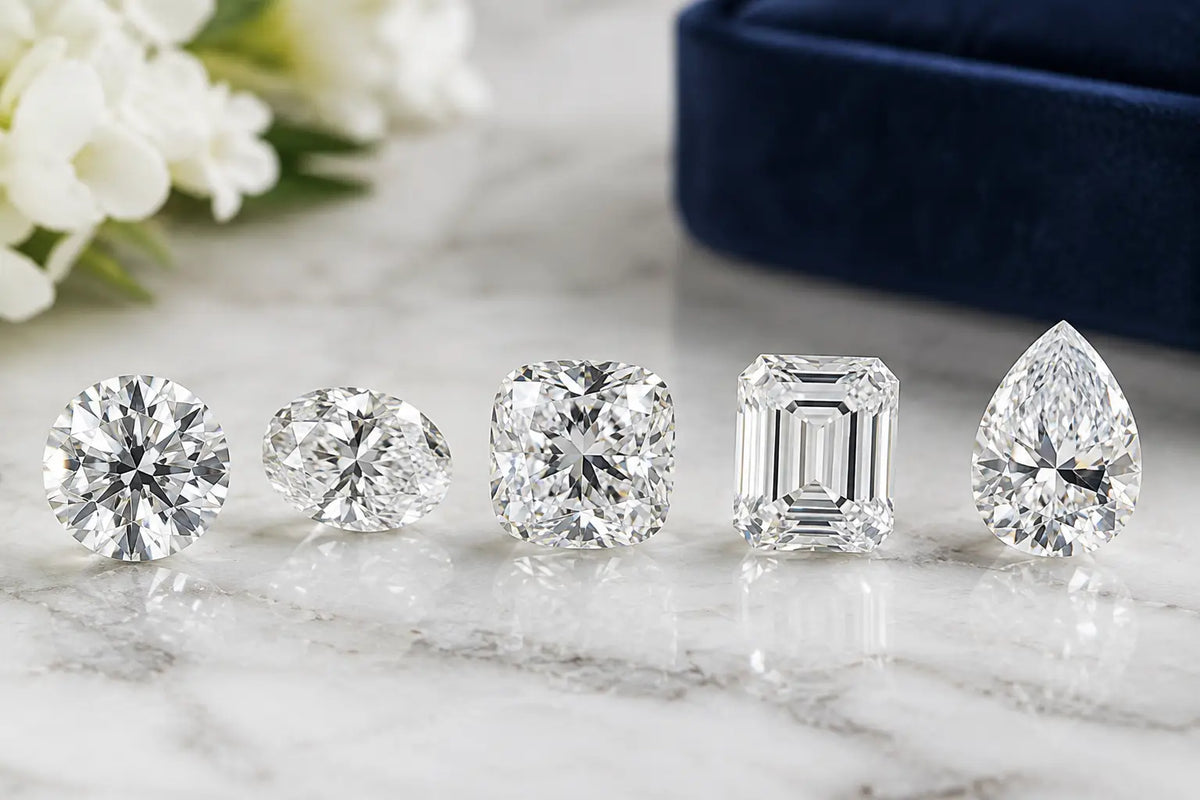
The round brilliant is generally the best diamond shape for concealing inclusions. Its 57 or 58 precisely arranged facets are designed to return light in a vivid display of brightness, fire, and scintillation. That active sparkle makes small inclusions less noticeable than they might be in a quieter, more open facet pattern.
Round diamonds also tend to look bright across their surface when cut well. Because the eye is drawn to their crisp flashes of light rather than lingering on one area, a small feather, pinpoint, or crystal may be difficult to identify without magnification. This is especially true when the inclusion sits away from the center or is obscured by a prong.
That does not mean every round diamond can carry a lower clarity grade gracefully. A dark crystal under the table, a large cloud that affects transparency, or a fracture close to the girdle deserves closer attention in any shape. But when all else is equal, a well-cut round brilliant offers the most reliable visual camouflage.
Other Shapes That Can Be Forgiving
Oval, pear, and marquise diamonds can also conceal minor inclusions well. These brilliant-style shapes use many facets and deliver lively sparkle, giving the eye plenty of movement to admire. Their elongated outlines create a flattering, elegant look on the hand and can make a diamond appear larger than a round stone of the same carat weight.
Cushion cuts are another thoughtful option, particularly modern cushion brilliant cuts with abundant faceting. Their softer, rounded-square silhouette and romantic flashes of light can make small inclusions less apparent. Since cushion cuts vary considerably from one diamond to another, reviewing the individual stone is more meaningful than relying on the shape name alone.
Princess cuts can hide certain inclusions effectively because of their intricate facet pattern. However, their pointed corners need protection. An inclusion or feather near a corner may be more concerning for durability than a similarly sized inclusion placed within the center of a round diamond.
Shapes That Reveal Inclusions More Easily
Step-cut diamonds, including emerald and Asscher cuts, are celebrated for a different kind of beauty. Their broad, parallel facets produce clean flashes of light and a hall-of-mirrors effect rather than the rapid sparkle of a brilliant cut. The result is poised, architectural, and timelessly elegant.
That open geometry also makes clarity more visible. Inclusions beneath the large central table of an emerald or Asscher cut can be easier to notice, especially if they are dark, reflective, or centrally positioned. For these shapes, many shoppers prefer a higher clarity grade or select a stone after carefully reviewing its visual appearance.
Radiant cuts sit between these categories. Their trimmed corners and mixed facet pattern create substantial sparkle, often making them more forgiving than emerald cuts. Still, their large table can reveal certain inclusions, so cut quality and inclusion placement remain essential.
Why Facet Pattern Matters More Than Shape Alone
A diamond shape gives you a useful starting point, but faceting determines much of its ability to disguise inclusions. Brilliant facets break light into many small reflections. When the stone moves, those reflections create a vibrant visual rhythm that can make small characteristics difficult to detect.
Step facets are larger and more linear. They invite the eye to look into the diamond, which is exactly why emerald and Asscher cuts feel so sophisticated. Their transparency is part of their appeal, but it leaves less room for visible inclusions.
Cut quality matters just as much. A beautifully cut oval, cushion, or round diamond can look more brilliant and more forgiving than a poorly cut stone with a stronger clarity grade. Look for a diamond with balanced proportions, appealing light return, and no obvious dark or hazy areas. Certification provides valuable clarity information, while clear imagery and video help you assess how those characteristics appear in real life.
The Inclusion Itself Changes the Answer
Not all inclusions are equally visible. A tiny white feather near the edge may disappear into a bright facet or beneath a prong, while a black crystal under the center table can be noticeable even in a highly sparkling shape. Clouds, needles, pinpoints, crystals, and feathers each interact with light differently.
Location is particularly important. Inclusions at the center of the table - the large top facet - are generally easier to see. Characteristics closer to the girdle can be less noticeable and may be covered by a setting, provided they do not create a durability concern. A professional jeweler can help evaluate this distinction, especially for a stone intended for everyday wear.
Transparency matters, too. Some inclusions are technically small but occur in a concentration that makes a diamond look less crisp. The ideal diamond is not simply one with an attractive clarity label. It is one that appears clean, bright, and beautiful to the unaided eye.
Choosing Clarity for Each Diamond Shape
For many round, oval, pear, marquise, radiant, princess, and cushion lab-grown diamonds, a carefully selected VS2 or SI1 stone can appear eye-clean and offer outstanding value. This is not a universal rule. At larger carat weights, inclusions are often easier to spot, and some SI1 diamonds are visibly cleaner than others with the same grade.
For emerald and Asscher cuts, shoppers often favor VS1 or VS2 clarity for a polished appearance, particularly in diamonds above one carat. A VVS grade can be exquisite, but it may not create a visible difference once the diamond is set and viewed at a normal distance. The right choice depends on the individual diamond and the level of visual perfection you want to prioritize.
Lab-grown diamonds follow the same clarity grading principles as mined diamonds. Their origin does not change how inclusions look or how light moves through the stone. What lab-grown diamonds can offer is the opportunity to consider a more generous carat weight, an elevated cut, or a refined setting while staying aligned with a thoughtful budget and modern values.
Use the Setting to Your Advantage
A setting can make a smart clarity choice look even more polished. Prongs positioned near a minor edge inclusion may cover it naturally. A halo adds surrounding brilliance that shifts attention toward the overall design. Pavé bands, side stones, and textured metalwork can create a rich visual composition where the center diamond remains the focal point.
For a minimalist solitaire, the center stone receives more visual attention. That does not require a flawless diamond, but it does make eye-clean clarity and strong cut quality especially worthwhile. Bezel settings can offer a sleek, contemporary frame and may obscure a small girdle-level inclusion while adding meaningful protection to the diamond’s edge.
The most refined choice is not about chasing a grade on paper. It is about selecting a diamond that looks luminous in the shape you love, feels confident for your lifestyle, and becomes part of jewelry that tells your story.